


Padua College in Kedron has submitted development plans to the Brisbane City Council to build an extension of its current building at its Assisi campus.
The proposal, designed by the award-winning firm M3 Architecture, calls for the partial demolition of the existing La Cordelle building. It also includes earthworks to facilitate the rear extension of the current structure.
The La Cordelle hall, constructed back 2004, houses a covered recreation and sports hall/court as well as accompanying amenities.
Artist’s visualisation for the building (Photo credit: M3 Architecture)
The multi-purpose hall will be expanded and air conditioned whilst the new layout will feature additional technical and design classrooms. Details of the planned development include:
Level 1: 1 construction workshop and associated outdoor covered area
Level 2: 2 design labs, 1 engineering lab, 1 clean tech workshop, and an outdoor breakout space
Level 3: Hall extension and storage
Level 4: Roof extension and plant deck
Proposed site plan (Photo credit: M3 Architecture)
According to planning documents submitted by the college, the extension will improve facilities for current students by expanding the campus within the existing education precinct. The proposal results in no loss of residential land in the area.
The planners stated that the proposal would give Padua College a chance to develop extra teaching areas and amenities for its present students in a coordinated way. They said this integrated approach would help increase and enhance the school’s existing educational facilities.
Inside La Cordelle (Photo credit: Padua College Kedron (Official)/Facebook)
“The proposal is considered to provide a maintain the existing residential amenity of the locale on the basis that the proposed education facilities primarily consists of non-residential sensitive uses, which has limited potential to adversely impact the surrounding residential Neighbourhoods,” said planners from Planning Initiatives.
Strategically situated in the heart of Stafford, the bridge is set to redefine connectivity for pedestrians and cyclists while providing a robust, flood-resistant crossing over Kedron Brook.
The project is part of the massive Kedron Brook restoration works after the creek crossing near Wolverhampton St succumbed to the destructive force of a devastating flood event in 2022, leading to its complete obliteration.
It’s also part of over $26 million worth of sustainable transportation infrastructure projects being rolled out in Brisbane.
Photo Credit: BCC
Photo Credit: BCC
Responding with diligence, the Council undertook the task of reconnecting the bikeway and initiated comprehensive improvement works to restore the area to its former glory.
The work has been a meticulous endeavour that tackled severe erosion along the eastern embankment of Kedron Brook.
Photo Credit: BCC
Key elements of the culvert crossing and adjacent concrete pathways washed away during the flood, were painstakingly reconstructed whilst a commitment to preserving the habitats of protected native species, such as the Tusked Frogs, was also set in place.
Photo Credit: BCC
Restoration efforts culminated in the early months of 2023, with the re-establishment of the destroyed Wolverhampton St creek crossing occurring in February of the same year. Whilst the focus initially rested on immediate restoration, the Council concurrently embarked on an ambitious endeavour: the design and realization of an upgraded bridge that not only guarantees long-term flood resilience but also amplifies connectivity, promoting active travel.
The new Leyton-Wolverhampton Bridge signals a renewed focus on fostering mobility, environmental stewardship, and community well-being, establishing the foundation for a more connected and resilient future.
Earlier this year, Mount Alvernia College in Kedron lost a specialist teacher and had to temporarily run classes after school, simply because of lack of teacher availability to deliver the course content.
The Catholic school for girls joins many other Brisbane schools that are now dealing with teacher shortages, adding extra strain to already stretched resources.
Recruitment is taking up huge amounts of time according to principal Samantha Jensen. She believes there is a real possibility for the teacher workforce crisis to worsen.
Photo credit: Mount Alvernia College/Google Maps
According to a 2023 report by school workforce improvement company People Bench, “supply” has emerged as one of the factors that could have the greatest negative impact on the school workforce over the next three years.
Photo credit: Polina Tankilevitch/Pexels
One principal surveyed in March-May 2023 said the increased competition for qualified teachers will make it harder to attract and retain staff.
“The most striking of these findings was that the most commonly cited supply issues (21% of responses) related to the availability of teachers on a casual, relief and short-term contract basis,” People Bench stated.
“An interesting counterpoint to this, however, is that around 6% of responses referenced candidates’ increasing expectations for more part-time and flexible work options, which schools were unable to meet, further constraining potential supply.”
In an issues paper, the Education Department highlighted that this is a global problem, with the competitive teaching market and COVID-19 ongoing impacts affecting teacher supply worldwide.
The paper outlined that addressing shortages cannot be solved by one jurisdiction or sector alone, but requires collaboration across governments, systems and schools.
The Kedron Football Club, one of the oldest in Queensland, has secured funding support from the Community Sustainability Action grant, a program designed to support sustainable practices and reduce energy consumption among its recipients.
The historic football club, founded in 1937, will utilise the grant of $30,000 to upgrade and install high-efficiency LED lighting at its fields, contributing to a significant reduction in energy usage and associated costs.
Kedron Football Club is among 68 community groups and not-for-profit organizations selected to receive funding under the Community Sustainability Action grant program.
These groups will share more than $3.4 million in funding for projects aimed at reducing emissions, cutting energy costs, and enhancing local resilience.
With this grant, the club will be able to implement the latest technologies, including renewable energy systems and energy-efficient lighting, as well as foster sustainability.
“Our community groups do such incredible work on the ground and it’s great to see funding go towards projects that can help them reduce their costs as well as their emissions,” Leanne Linard, Minister for Environment and the Great Barrier Reef said.
With its rich history dating back over eight decades, the Kedron Football Club stands as one of the oldest clubs in the league. The club’s formation was the result of the amalgamation between Kedron and Wooloowin Past Pupil’s Associations, and its founding members.
From its early years, Kedron AFC members have exhibited their prowess on the field, clinching their first premiership success in its second 18’s in the inaugural season. The club’s dedication to excellence continued through the decades, securing multiple premierships and fostering an intense rivalry with Windsor Football Club.
In a strategic merger, Kedron Football Club joined forces with Wilston Grange in 1989 to form the Kedron Grange Football Club, known as the “Demons.” However, the merged entity faced challenges, leading to its eventual dissolution.
By 2006, Kedron Football Club had made a triumphant return to senior football and remained resilient in its pursuit of excellence.
“The Palaszczuk Government is committed to taking action on climate change and increasing renewable energy use in our state to 80 per cent by 2035,” Leanne Linard, Minister for Environment and the Great Barrier Reef, expressed enthusiasm for the community’s commitment to climate change action.
“The overwhelming interest shown by community groups in this grant round points to the priority Queenslanders now place on taking climate change action,” she added.
Supporters view the Club’s dedication to both its sporting legacy and the environment as a commendable example for the community.
The two-metre tall fence was put up to improve security and prevent trespassing and vandalism at the school grounds. However, some residents believe it makes the school look too much like a prison.
“Agree with the idea but why security fence needed?” said one member of the school’s public group on Facebook.
Photo credit: Kedron State High School/Facebook
However, other locals argued that the fence was necessary to keep out troublemakers, with one saying it was not “fencing them in but rather fencing undesirables out.” Some even liked the colour of the fence, adding that it complemented the school’s uniform.
“At just over two metres tall, our first brand new fence since 1962 creates a remarkable security contrast with the previous (approx 2 foot 6 inch) chain wire fence next door at the former college,” said a member of the Kedron State High School Class Photos group.
Photo credit: Kedron State High School/Facebook
The school had reportedly seen an increase in vandalism and issues with dog waste being left on its sports ovals by non-students in recent years.
Kedron State High School is one of 58 Queensland state schools to have installed new security fences between 2020 and 2023 based on security incident reports, according to the Department of Education. Security incidents include trespassing, burglary, and arson attempts.
The new security fence is constructed from panels made up of black spear-top steel pickets and rails, with galvanised steel tubing. This type of fencing is one of the designs approved by the Department of Education for areas where the school boundary is accessible from public spaces like sidewalks or roads.
The department conducts annual security risk assessments of schools and funds security upgrades like fences to protect students, faculty, and property. Five more schools are slated to receive new fences in 2023 and 2024.
In the late 19th century, Kedron was a hub for tanneries, skin traders, and slaughter yards, which were clustered around it. Do you know what made the area so ideal for the ‘skin trade?’
Established in 1886 by Michael Joseph Gallagher, the Kedron Tannery quickly earned a reputation for producing high-quality leather products. Situated on the western side of Gympie Road and upstream from other tanneries along the creek, the success of this business reached nationwide recognition, thanks to Mr Gallagher’s business acumen and the effectiveness of his tanning methods.
Mr Gallagher’s efforts contributed significantly to the growth of Kedron as a thriving leather industry centre until its closure in the 1960s or two decades after he retired at 84 years old.
In the same period, Paul Maggs and his family settled in the area, and in 1889, he founded the Edinburgh Tannery at the end of Nundah Street, adjacent to Kedron Creek.
The Edinburgh Tannery, like Gallagher’s, experienced remarkable success, becoming another well-known name in Australia’s leather trade. With its strategic location alongside the creek, the tannery benefited from easy access to water, a crucial resource for the tanning process.
Mr Maggs was a prominent figure in the tanning industry, and apart from the Edinburgh Tannery, he owned two other tanneries in the region. The Avondale Tannery, established in 1889, was the first of his ventures, but it was later sold in 1894. The larger Edinburgh Tannery, established in the same year as the Avondale Tannery’s sale, operated until 1904 before Mr Maggs embarked on a new venture.
In 1906, he built the Bristol Tannery downstream, which would ultimately become the last and largest of his three tanneries. The Bristol Tannery thrived under his ownership for six decades, leaving a significant mark on the history of the local leather industry. It became a prominent landmark along Kedron Creek and contributed to the economic prosperity of the region.
Tannery Placed Kedron on the Map
The region’s abundant water flow, particularly in the catchment area of Kedron Brook, provided an ideal environment for tanneries, skin traders, and slaughter yards to flourish.
As the tanneries flourished, Kedron became the centre of the industry on the North Coast. At that time,tanneries were all running at full capacity, and their leather found its way to markets in the southern states, as inter-colonial barriers had been broken down.
Kedron’s tanners contributed substantially to the state’s economy through their importation of materials and their leather exports.
Inside the tanneries, powerful and efficient machinery aided in labour-saving processes. The supply of hides came from various locations across Queensland, amounting to tens of thousands of hides processed annually.
In addition to hides, there was also a substantial trade in sheepskins, with a high demand that the tanners struggled to keep up with. Kangaroo skins, on the other hand, were becoming scarcer each year, leading to a decrease in their trade.
The primary bark used for tanning came from the black and silver Wattle of South Australia, and tanneries imported significant quantities of it annually.
However, as the tanneries continued to prosper, concerns from local residents regarding pollution increased. This led to early legislation targeting the tannery trade in the area.
Despite the challenges posed by such regulations, the industry persisted, adapting to changing times and demands. Both Gallagher’s Kedron Tannery and Edinburgh Tannery continued to thrive in their respective locations.
As time passed, the tanning industry faced further transformations. In 1966, Johnsons & Sons of Chermside acquired Paul Maggs’ tanneries, including the Bristol Tannery, marking a new chapter in the tanning business.
The tanneries remained operational until 1973, when Johnsons & Sons made the decision to sell the properties for housing development. They relocated their operations to the northern outskirts of Brisbane, an area with a long-standing tradition of hosting the tanning industry.
Plans by Brisbane Racing Club to revitalise the abandoned Stafford Bowls Club site have been met with fierce opposition from locals complaining about the proposed $7.5-million development and the prospect of pokies operating nine hours a day, seven days a week in the neighbourhood.
The State’s gambling regulator granted approval for 50 gaming machines to be operated by the Brisbane Racing Club. Although significantly less than the club’s initial request for approval for 76 machines, the decision has faced criticism from residents who believe that they have not had adequate opportunity to provide community feedback, having allegedly been given a tight, 10-day window earlier this year to voice their objections to the development.
Locals’ concerns
The Stafford Bowls Club ceased operations in 2016. Today, a group of locals have organised the Stafford Community Hub not Race Club, expressing their objections to the proposed makeover.
Photo credit: Stephen Bates – Greens MP for Brisbane, Stafford Community Hub Not Race Club/Facebook
The group believes that the addition of gaming machines represents an excessive and unsustainable increase in gambling capacity, particularly in an already saturated local community area with high accessibility and exposure to gambling.
A petition signed by over 200 individuals in early 2023 demanded the return of Stafford Bowls Club to the community. This call for action came in response to the Brisbane City Council’s approval of a lease transfer to the Brisbane Racing Club.
They have also expressed concerns about the potential negative impact on nearby socio-economically disadvantaged areas, which are home to high-risk groups, including a significant concentration of social housing.
Photo credit: Anna Campbell, Stafford Community Hub Not Race Club/Facebook
Furthermore, critics argue that the revenue generated from the gaming machines will primarily benefit membership groups and communities outside of the local community area, rather than directly benefiting Club Stafford members or residents.
Approval Conditions
Photo credit: Brisbane City Council
The Office of Liquor and Gaming Regulation (OLGR) imposed ten conditions on the gaming machines, including mandatory hourly staff walkthroughs and the maintenance of log books documenting any instances of problem gambling observed by the staff and the measures taken to address it.
The machines will operate from 10:00 a.m. to midnight seven days a week, with the added requirement of facial recognition technology to identify banned individuals and technology to enable patrons to set predetermined limits on their gambling losses.
Photo credit: Michael Costello/Google Maps
Another condition stipulates that no alcohol will be served after 10:00 p.m., aiming to minimise the potential negative effects of alcohol consumption on gambling behaviour.
The club’s plans for the site include the addition of new dining facilities, a cafe, and a sports bar.
In response to the objections, the Brisbane Racing Club has assured the public that it will collaborate with various community groups and relevant stakeholders to create a space that serves the wider community.
Her beloved “Äunty Erika” is both the inspiration and the subject behind the winning artwork of Lily Hobbs, a 17-year-old artist from Kedron, who won the top prize for the 16-18 age group at the 11th annual Young Archie competition.
Inspired by the famous Archibald Prize, the Young Archie competition asks young artists aged 5 to 18 to create a portrait of someone special to them, someone who plays an important role in their life.
Lily chose her aunt Ericka and lovingly painted her in a pensive mode, her face in light and shadow.
”Aunty Erika” | Photo Credit: Art Gallery of NSW / artgallery.nsw.gov.au
Lily explained that her winning artwork captured a rare moment. She said her aunt has a bright and charming personality and in the portrait, Lily said she chose to show deeper emotions and her aunt’s more vulnerable side. She said she also wanted to show her aunt’s generosity and strength even in difficult times.
In the 5-8 years category, eight-year-old Phoebe Raft from Terrigal, NSW, won the top prize for her amazing self-portrait and Toby Lopata, a nine-year-old from Elsternwick, Victoria, was awarded the 9-12 years prize for his portrait of his grandpa.
Jasmine Guy, 15, from Oatley NSW, won in the 13-15 years category with a striking painting of her friend. Finally, Kedron’s 17-year-old Lily Hobbs received the top award in the 16-18 age group for her thoughtful portrait of her aunt.
This year’s competition received a record number of submissions from all over Australia, with over 3,400 artworks entered.
The guest judge, artist Grace Lillian Lee, faced the difficult task of selecting the finalists from such a talented pool of young artists. Lee expressed her gratitude for the opportunity to learn about the artists and the people they depicted in their portraits.
Maud Page, the deputy director of the Art Gallery of NSW, praised the Young Archie competition for supporting the next generation of Australian artists. She emphasised the importance of encouraging young artists to express their individuality and creativity.
The winners in each age category were announced in Sydney, and now an exhibition of all the finalists’ artwork can be seen at the Art Gallery of NSW. The winners in each category will receive a cash prize of $200, while the remaining finalists will be awarded $50 each.
The Young Archie exhibition, featuring incredible artworks, is now open to the public for free at the Art Gallery of NSW. Visitors can also explore the Archibald, Wynne, and Sulman Prizes for 2023. This competition celebrates the talent and artistic expression of young people while showcasing the power of art to capture emotions and tell stories.
Kedron’s Bradbury Park has undergone a remarkable transformation just in time for the school holidays, with a new, futuristic playscape for older kids, updated play areas for activities that include cricket and netball, and spaces for the whole family to gather, pets included.
Located at 91 Kitchener Road, Bradbury Park has long been a popular recreational spot for the community. Designed to cater to children aged 10 to 15, the park now boasts a revitalised playscape, complete with climbing towers, bridges, and whimsical play structures. The exciting additions to the park aim to provide older kids with an engaging and thrilling outdoor experience.
Aside from the new playscape, families can enjoy a range of amenities, including shady spots for picnics, electric barbecue facilities, and various sporting facilities like cricket nets and a netball facility.
The introduction of the futuristic playscape fills a gap in the recreational offerings for older kids in the area. With indoor play centres often being expensive, this innovative outdoor play area provides a more accessible and affordable option for families.
Photo Credit: BrisbaneCityCouncil
The park also features a dog off-leash area, making it a suitable destination for the entire family. Parents and children alike have expressed their gratitude for the addition, praising the park as an amazing and much-needed facility.
However, one visitor did offer a word of caution, advising others to wear dark clothes when visiting the playscape. The wooden structures in the park have been charred, resulting in black residue. Whilst this may not deter the adventurous spirits of children, it’s important for parents to be aware.
Photo Credit: BrisbaneCityCouncil
The Bradbury Park improvement project is part of Brisbane City Council’s commitment to enhancing and maintaining over 2100 parks across the city. As the Marchant ward continues to grow, it is crucial to ensure that parks can cater to the recreational needs of residents.
The project has been a collaborative effort between Brisbane City Council and the community. Extensive community engagement was conducted in late 2019 to gather feedback and ensure the park’s enhancements align with the community’s desires.
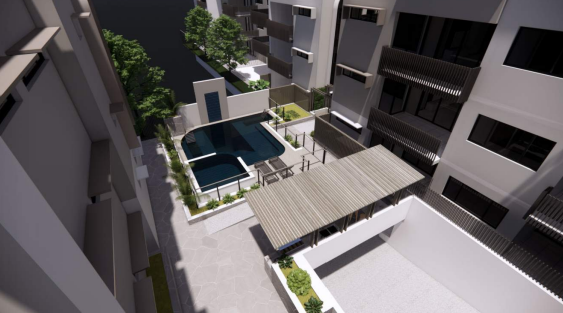
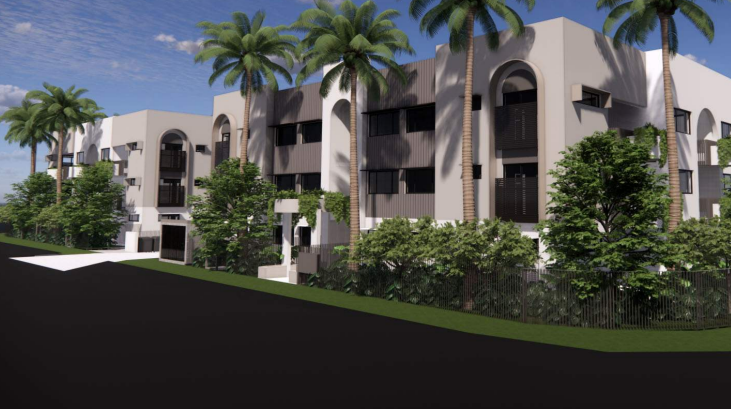
A development application has been lodged for a multiple dwelling project located at 19-25 Norman Avenue. Designed by HAL Architects, this proposed development aims to offer a modern and vibrant living space whilst prioritising community engagement and comfort.
The centrepiece of the project is a six-storey residential building that will house a total of forty-two (42) apartments. The design incorporates a range of materials and innovative screening techniques, ensuring a visually appealing facade that enhances the living experience for both future residents and neighbours.
Level 2 | Photo Credit: Brisbane City Council / developmenti.brisbane.qld.gov.au Level 3 | Photo Credit: Brisbane City Council / developmenti.brisbane.qld.gov.au
Each unit above the ground floor will feature a minimum of 12 sqm private balconies, allowing residents to enjoy outdoor spaces and soak in the surrounding views. Additionally, the ground floor units will have the added benefit of a minimum 35 sqm private courtyard, providing ample room for relaxation and leisure activities.
One of the standout features of this development is the generous rooftop garden and communal recreation area. Situated on the top level, this space will offer on-site passive recreation opportunities for the residents, fostering a sense of community and providing a tranquil retreat amidst the urban landscape.
Level 4 | Photo Credit: Brisbane City Council / developmenti.brisbane.qld.gov.au Level 5 | Photo Credit: Brisbane City Council / developmenti.brisbane.qld.gov.au
Parking and accessibility have also been carefully considered in the plans. The proposal includes 75 car park spaces, with 67 dedicated to residents and 8 for visitors. Furthermore, the development will provide 53 bicycle spaces, catering to the increasing demand for sustainable transportation options.
The design philosophy behind the development emphasises a human scale, promoting casual surveillance and an engaging streetscape. Balconies, openings, and strategically positioned windows overlook Norman Avenue, encouraging interaction between residents and the neighbourhood.
Roof terrace | Photo Credit: Brisbane City Council / developmenti.brisbane.qld.gov.au
Privacy is also a key consideration, achieved through fine-level elevation detailing and screening techniques that ensure a sense of seclusion whilst enhancing the facade’s visual appeal.
In terms of landscaping, the proposed development strikes a balance between the built form and green space. Ample deep planting areas, capable of accommodating subtropical shade trees, will be incorporated along the front and rear property boundaries. This thoughtful approach will soften the overall built form of the apartment building, providing shade and contributing to a visually pleasing environment.