



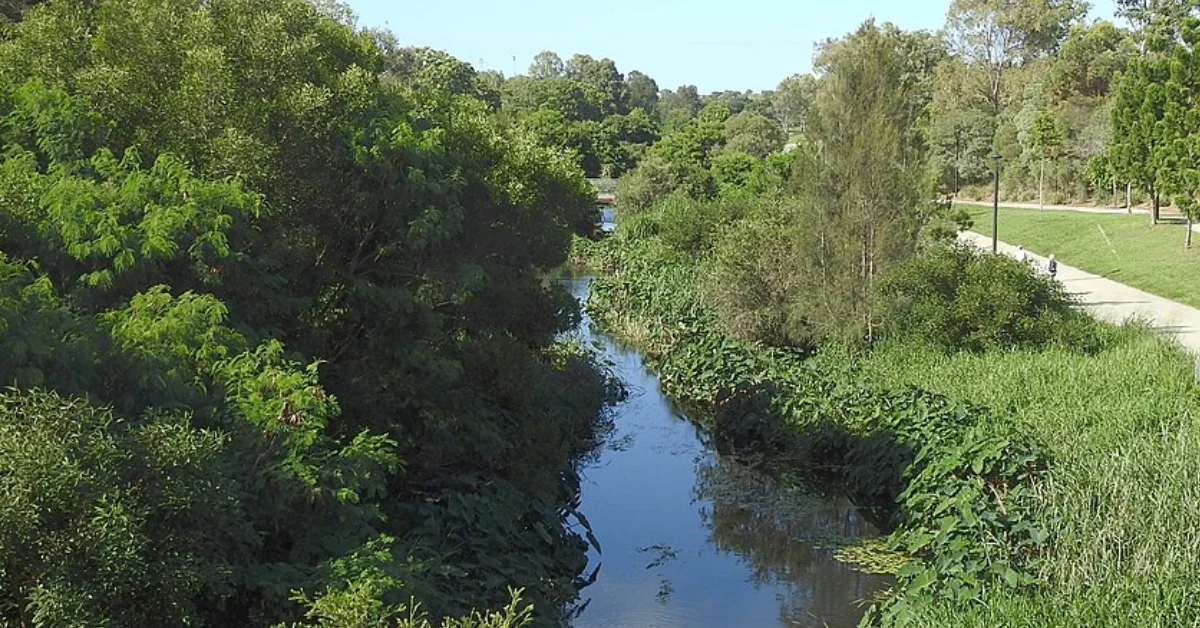
Kedron Brook, which flows east through Enoggera, Stafford, Grange and Lutwyche before reaching Moreton Bay, carries the highest load of microplastic particles in its sediment of any of the Brisbane creeks examined in a new Queensland University of Technology study.
Read: Stafford’s Next Chapter: A Suburban Shift Along Kedron Brook
The research, published in the journal Environmental Pollution, found a median abundance of roughly 4,400 microplastic items per kilogram of dry sediment in the brook.
The study analysed sediment samples from Kedron Brook, Bulimba Creek, and Enoggera Creek, taking samples at six sites along each waterway, from the upstream headwaters right down to estuarine level, across four sampling periods over the course of a year.
What is driving the load in Kedron Brook?
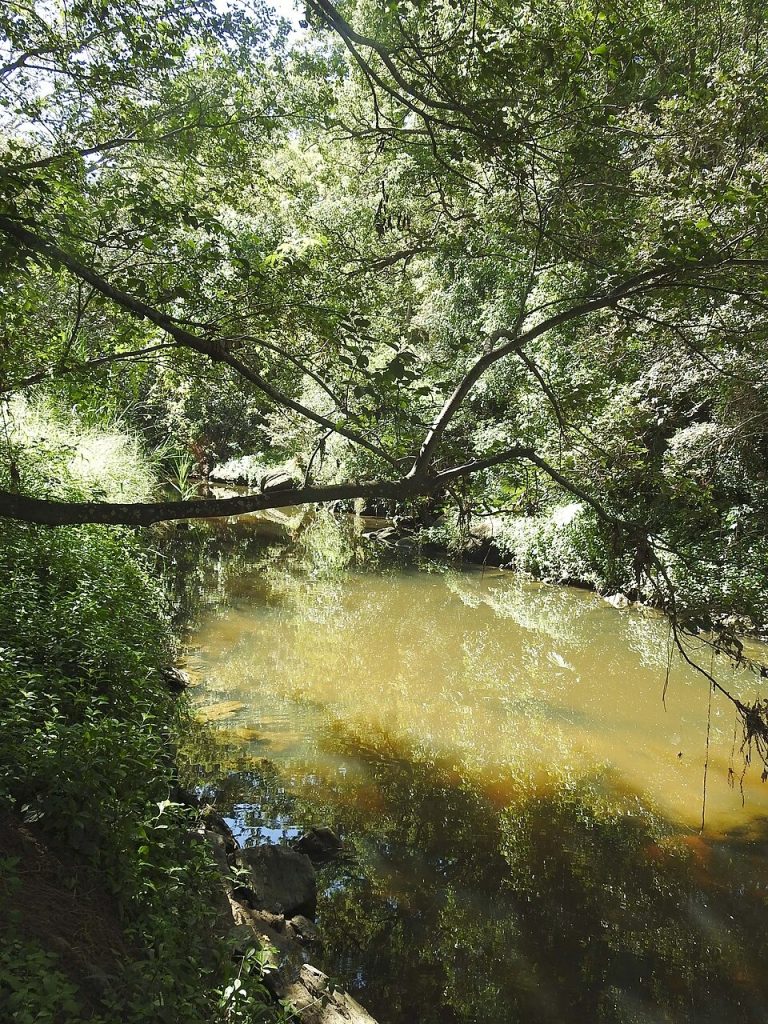
Lead researcher and QUT PhD candidate Heshani Mudalige, from QUT’s School of Chemistry and Physics, said the brook’s passage through commercial and industrial areas played a central role in driving the microplastic figure up.
Construction activity, single-use plastic disposal, food packaging waste and nearby recreational areas all contribute to elevated levels of polyethylene — the most abundant plastic type found in the brook’s sediment. Stormwater runoff from residential households, sports fields and parks adds further to the load.
The brook’s extensive flat areas, surrounded by impervious surfaces such as roads and car parks, create conditions where microplastics carried by runoff are deposited and retained.
Microplastic levels in Kedron Brook peaked in March, which Ms Mudalige attributed to high-flow conditions during the summer wet season pushing plastic particles into the sediment.
The dominant plastic types found across all three creeks were polyethylene (PE), used widely in packaging, bottles and pipes; polypropylene (PP), common in food containers and sportswear; and polymethyl methacrylate (PMMA). Polystyrene (PS) was also present in Kedron Brook’s sediment.
How did the other creeks compare?
Bulimba Creek recorded the second-highest microplastic abundance at approximately 4,100 items per kilogram of dry sediment, with its load peaking in November. Ms Mudalige said Bulimba Creek flows through predominantly residential and commercial areas, with construction and maintenance sites contributing high amounts of PE as well as PP and PMMA, likely sourced from food and consumer packaging, textiles, industrial raw materials and household plastics.
Enoggera Creek recorded the lowest load of the three at approximately 2,800 items per kilogram. The presence of Enoggera Dam was identified as a key factor, with the dam regulating streamflow from upstream and trapping a significant portion of microplastics before they can travel further downstream.
Read: Kedron Brook Set for Major Transformation in Olympic Lead-up
A first step toward quantifying Moreton Bay’s microplastic inputs
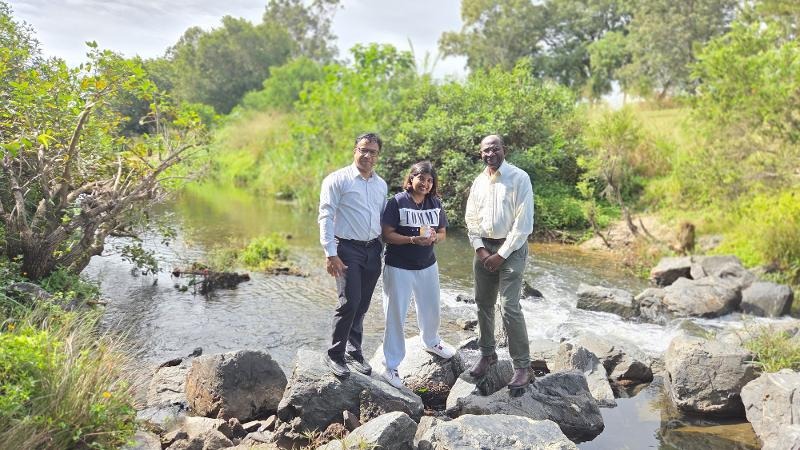
Associate Professor Prasanna Egodawatta, from QUT’s School of Civil and Environmental Engineering, described the study as a first step towards quantifying how much plastic pollution reaches Moreton Bay from land via the stormwater pathway. He said heavily urbanised catchments in South East Queensland are significant contributors to that pollution, and that the physical characteristics of a creek, its shape, slope and flow behaviour, determine how microplastics move through it.
Ms Mudalige said the overall findings indicate that seasonal variability exerts a dominant influence on microplastic abundance, while land use and the intensity of human activity in each catchment also shape how much plastic accumulates in the sediment.
Published 25-May-2026


