





From ocean swims to Anzac candles: A morning of quiet rituals, long roads and deeper reflection
Before sunrise, people were already in motion — in the water, on the road, out on verandas or preparing for the day ahead. That’s the shape of a Macca morning: small moments, told simply, that add up to something bigger about how people live and what they hold onto.
Cold water, clear heads
On the Central Coast, Nader was preparing to swim from Maitland Bay to Kilcare — about three and a half kilometres.
“It’s about three and a half kilometres,” he said, as if it were nothing.
But it’s part of a much bigger series — nine legs stretching to around 40 kilometres. Early starts, 12-degree air, 21-degree water. For him, it’s routine.
“It’s just so good for our mental health… everyone should get into it.”
Swimming, as Macca pointed out, has a way of simplifying things. No noise, no clutter. Just movement and breath.
Candles, surfboats and silence
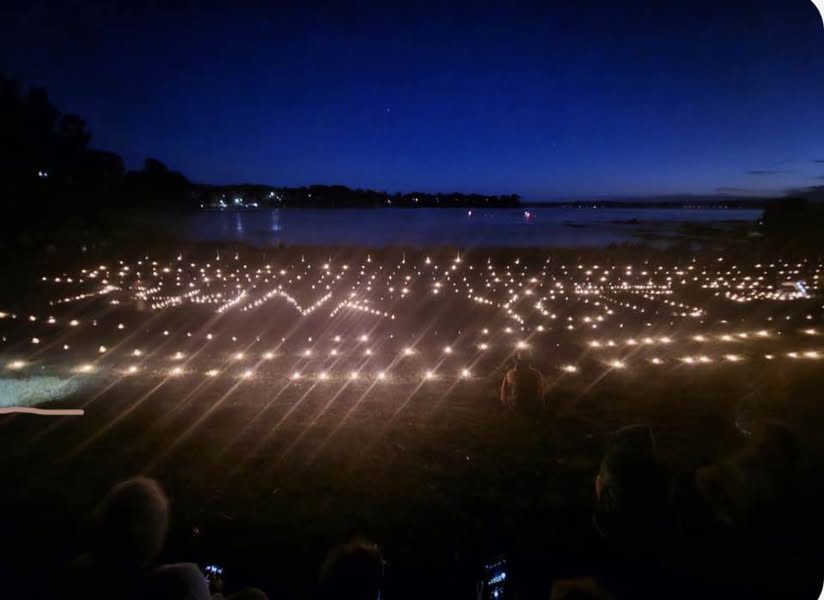
Dawn’s call from Batemans Bay carried more weight.
What began with 300 candles after a visit to Gallipoli has grown to more than 1,300 at Wimbee Beach. Hundreds gather before dawn.
“And the candles just light up the entire foreshore.”
A bagpiper, Jamie Wright, plays from a rocky outcrop. The Ode is shared between an Australian and a New Zealander. Surfboats row in and raise their oars during the Last Post.
But it’s the silence that defines it.
“You can hear a pin drop… there wasn’t a dry eye.”
This year, the message will again be spelled out in candles: Lest We Forget.
Pickleball’s surge
In Blacktown, Gary was heading to the NSW Pickleball Championships.
“We’ve had 1,100 competitors.”
The sport — a mix of tennis, badminton and table tennis — is booming, especially post-COVID. All ages, all backgrounds.
Mixed doubles day brings its own pressure.
“A lot of married couples play together… test the relationship.”
No prize money. Just medals, bragging rights, and a growing community.
A veranda, frost and horses
In the Southern Highlands, Andrew started with a quiet image — a cold morning near Mittagong, mist settling over the valley.
From there, his story stretched wider. Sheep and cattle in New England. Horses from childhood. A family tied to the Australian Stock Horse world.
When asked about campdrafting, he broke it down carefully — separating a beast from the mob, controlling it, then guiding it through a course.
“You show the skill of the horse and the rider… then call for the gate.”
It’s demanding work.
“It is exhausting… but it’s good fun.”
Fuel, freight and hard numbers
For Joel Lydgate, the focus was cost.
“We’re looking at $850 to $1,000 extra… just in fuel.”
That’s per trip.
Fuel has surged sharply — at one point up more than 50 per cent, by his account — and it can’t be absorbed.
“Someone’s got to pay it eventually.”
He reflected on a drought run into the Pilliga, hauling hay when it was needed most.
“If it was diesel prices now… we wouldn’t have done it.”
That’s the shift — goodwill meets reality.
Back in the water — and a confronting return
From Fiji, Kieran Kelly’s call was one of the longest — and most reflective.
After more than 30 years away from diving, he returned expecting familiarity.
“I was stunned.”
He described reefs that felt emptier than he remembered — coral still there in structure, but with less colour and movement.
“All the little houses are still there, but there’s no one in them.”
In his view, the difference was hard to ignore. At the same time, Fiji itself has changed. Once basic and remote — “sleeping in a grass hut, eating bananas and coconuts” — it’s now built around tourism, with constant movement of boats and people.
“The very thing that attracts people… ends up spoiling it.”
Not a conclusion, just an observation from someone returning after decades away.
Signwriting, skill and doing it by hand
On Bruny Island, Rod was preparing for a job he’s done for decades — painting Lest We Forget across AFL grounds in Hobart.
“I don’t use any AI… it’s all done the old-fashioned way.”
String lines, measurements, steady hands. Letters up to 30 metres long.
It takes about four hours, most of that in preparation.
What stood out most — he’s dyslexic.
“You really do have to think about what you’re doing.”
After 50 years, this will be his last.
“It’s a privilege.”
River mornings
In Echuca, Richard was watching the paddle steamers come to life.
“Just watching the smoke start to come out of the boats.”
The Murray is low, a bit dirty — something you notice when you’ve spent your life on it. It takes years to earn a licence, but the river itself teaches more than anything else.
Heavy loads, long days
In South Australia, Kim was hauling copper concentrate in triple road trains — about 138 tonnes per load, two runs a day.
“Pretty good, actually… still busy.”
Like others, he turned to Anzac Day — a moment that cuts through routine.
Roads, floods and keeping Australia moving
On the NT highways, another driver painted a rougher picture after recent flooding.
“The potholes… you could park a Mini Minor in them.”
Sections of road have been torn up, but crews have kept traffic moving.
“The effort they put in… unbelievable.”
Even so, the country is alive — grass high, ranges green, the landscape pushing back after the water.
Old maps and letting go of a life’s work
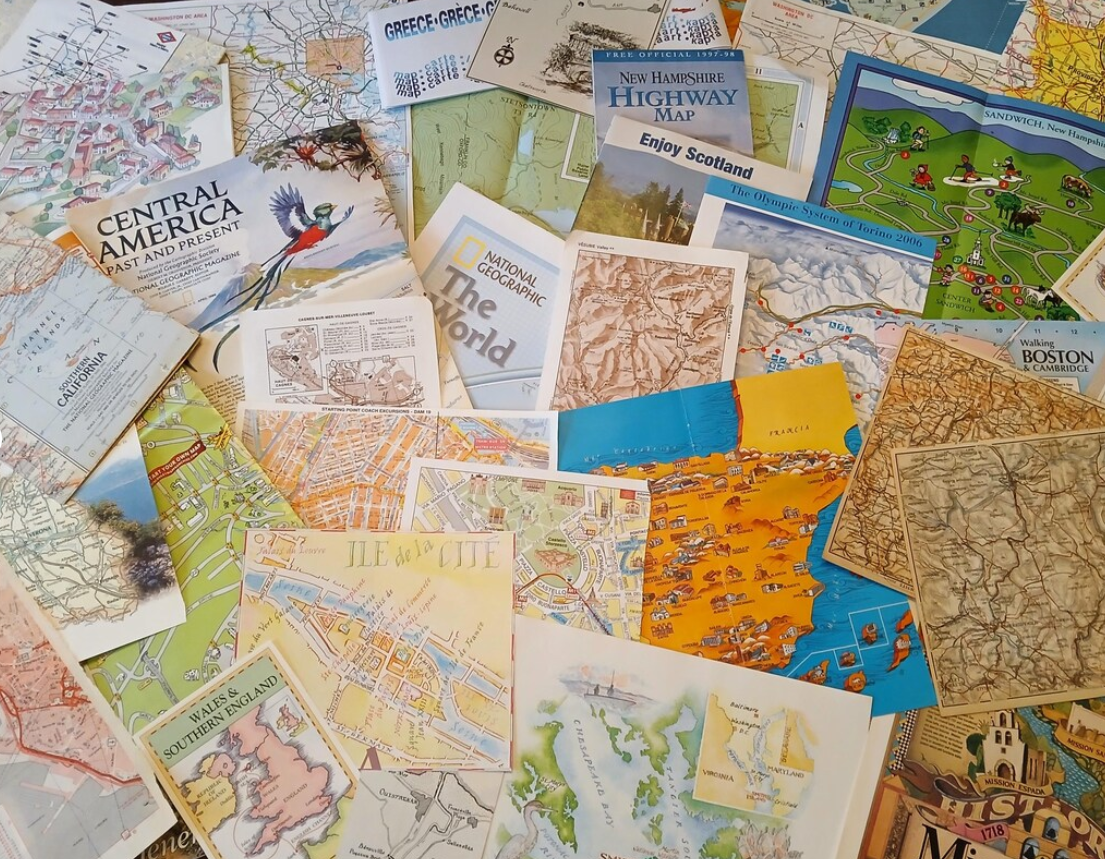
Old maps and letting go of a life’s work
When Mehmet Tuglu reached out on the April 19 program, it wasn’t just about clearing space — it was about what to do with a lifetime of work.
He’s sitting on hundreds of paper maps — 600 to 800 by his estimate — detailed topographic sheets gathered and used over decades.
“They show things like hay sheds and ruins… surveyors have actually been to those places.”
That’s what struck him most. The level of detail. These weren’t just pulled from aerial images — they were built from people physically walking the ground, mapping it properly.
For years, they were essential. Precise. Reliable. Something you worked from.
Now, he hasn’t needed them for 20 years.
He’s tried to give them away — councils, organisations, anyone who might use them — but hasn’t had much luck.
“It would be a big waste to dump these.”
That’s the dilemma.
Because the world has moved on quickly. Paper maps gave way to digital versions, then interactive platforms, and now satellite navigation that tells you where to go in real time. You can zoom in on almost any part of the country without ever unfolding a sheet.
The convenience is obvious. But something has shifted with it.
There’s a generation that’s never really learned to read a map — and another that still trusts them more than a screen.
Mehmet’s collection sits right in between.
Still accurate. Still detailed. But no longer needed in the way it once was.
Not obsolete — just outpaced.
Flood memories and bush stories
Jumbuck’s call reached back to the 1970s — floods around Cooper Creek and Innamincka.
“Real white sand… about six foot deep.”
Clearing roads, living in a swag, watching the country reshape itself after water moves through it. The kind of story that sits with people who’ve worked that country long enough.
A quiet act of courage remembered
One message stood out in the lead-up to Anzac Day.
Trooper Kenneth Anderson Bain — injured at Gallipoli — later saw a young child fall overboard at sea and jumped in without hesitation to try to save him.
Neither survived.
A reminder that when the Last Post is played, there are countless names like his — acts of courage that live on quietly.
A march that won’t be missed
And in Colac, one story landed simply.
Brian Cuthbertson, 82, is preparing for his 53rd consecutive Anzac Day march.
“He didn’t want to miss it… so he’s flying home to do it.”
No fuss. Just showing up. Every year.
Across the morning, nothing felt forced.
Just people moving through their routines — swimming, driving, painting, remembering — and, in their own way, holding onto something that matters.
Listen to the podcast episode here.
Disclaimer: ‘Australia All Over’ is a program produced and broadcast by the ABC Local Radio Network and hosted by Ian McNamara. Brisbane Suburbs Online News has no affiliation with Ian McNamara, the ABC, or the ‘Australia All Over’ program. This weekly review is an independent summary based on publicly available episodes. All original content and recordings remain the property of the ABC. Our summaries are written in our own words and are intended for commentary and review purposes only. Readers can listen to the full episodes via the official ABC platforms.