

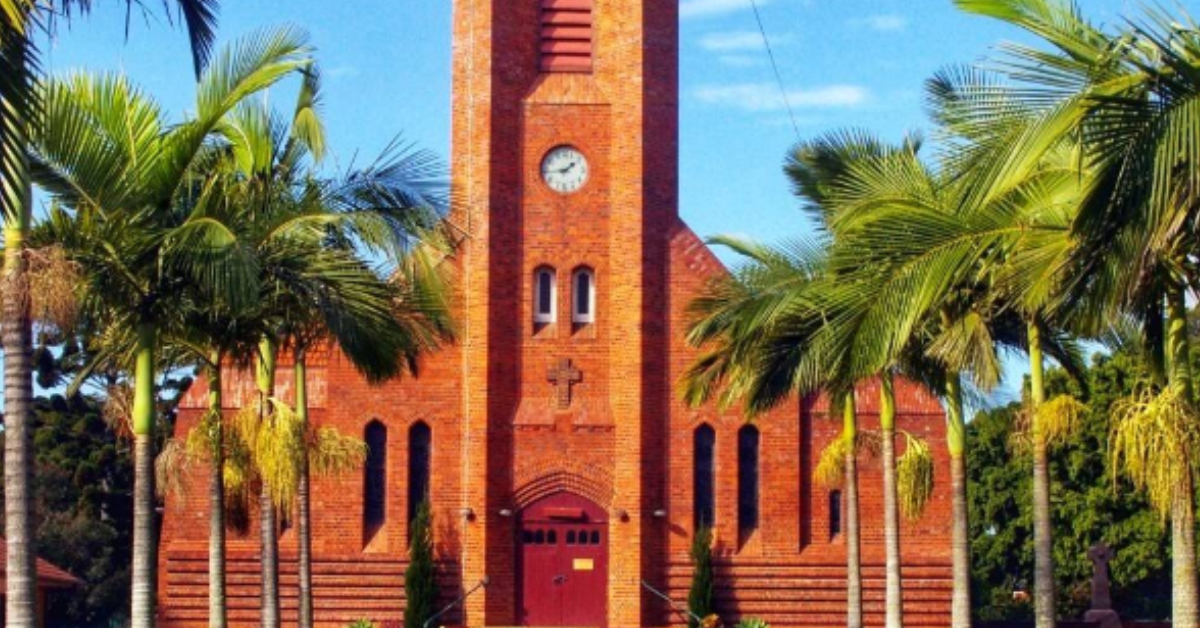
Celebrating 100 Years of History at St Andrew’s in Lutwyche

Lutwyche is home to a historic church that has anchored the local community for over 160 years, with St Andrew’s Anglican Church reaching its 100th year of service this week.


A Foundation Built on Local Roots
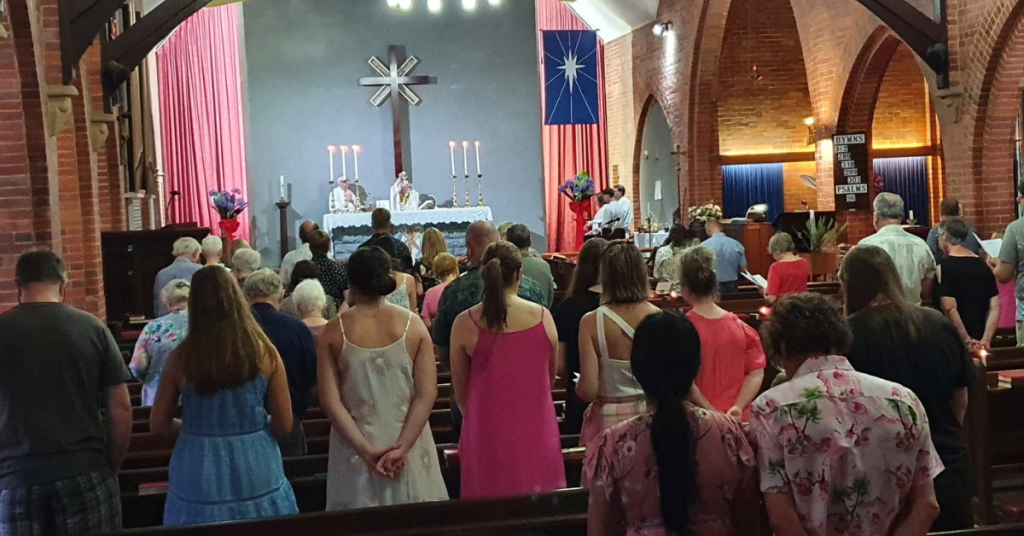
The story of the parish began when Judge Alfred Lutwyche, the inaugural Supreme Court Judge for the Moreton Bay district, provided the land for a place of worship in the 1860s. After residents voiced a collective need for a local church near Kedron Brook, the judge stepped forward to secure the site. 

The original building, a timber construction designed in the Gothic style, stood on the property as an English-style village church. Remarkably, the community managed to build it entirely through public subscription, ensuring the site was free of debt from its first day of operation.

Evolution of a Landmark

As the population grew in the early 1920s, the original wooden building proved too small for the expanding congregation. The parish commissioned architect Louis Williams to design a more substantial replacement, leading to the construction of the iconic brick building still found on Lutwyche Road today. When the doors finally welcomed the public in 1926, the structure made history as the first Anglican church in Brisbane to feature a tower and spire.

The site later received significant upgrades in 1960. During this period, the older timber sections were removed to make way for a new sanctuary that incorporated ancient stonework from South Wales. The church also became well-known for its collection of 13 bells, which were cast in England and installed in the late 1920s to mark the church’s unique presence in the landscape.

A Lasting Community Presence

The church grounds hold deep personal significance for many, including the current Priest-in-Charge, Jenny Simson. Having been baptised and confirmed at the church as a child, she now oversees the parish where her own history began. She notes that the church has served as a consistent backdrop for the milestones of local lives, witnessing families return over decades for weddings and the baptisms of their own children.

Beyond the Sunday services, the parish maintains a long tradition of forward-thinking involvement. Records from the 1890s reveal that the church’s Parochial Council was one of the first in the region to invite women to take seats as elected members. 

Visitors to the grounds can still see the resting place of Judge Lutwyche, whose grave is marked by a distinctive Celtic cross. Inside, the building preserves history through stained glass windows saved from the original 1866 structure, which continue to depict various saints and figures.


Commemorating the Century

To mark the centenary, Bishop Sarah Plowman led a special service, followed by morning tea and guided tours of the grounds. The Windsor Historical Society provided a detailed timeline and a collection of vintage photographs, allowing guests to trace the path from the site’s humble timber beginnings to its present-day role. It was a day for both long-term parishioners and new residents to explore the layers of history that define this corner of Brisbane.

Published Date 05-August-2026

St Carthage’s School: A Gordon Park Landmark with a Rich History

St Carthage’s School in Gordon Park stands as a testament to time, weaving a rich tapestry of history, faith, and community spirit. Constructed in 1929, this enduring establishment has long served the dual role of church and school, playing a pivotal part in shaping the suburb’s identity.


Brisbane’s Catholic community was fast growing in the vibrant late 1920s. With his great foresight, Archbishop James Duhig saw Gordon Park needed a new parish.

His announcement of St Carthage’s came as a surprise to many locals, who questioned whether the burgeoning suburb could sustain such an ambitious project.

The first priest of the parish, Father John McCarthy took the lead and the construction started quickly. The foundation stone was laid by July 1929, and by November the elegant Georgian Revival building, designed by architect J.P. Donoghue, stood ready.

This two-storey brick structure, with its school on the ground floor and church above, became a symbol of hope and resilience.

Photo Caption: St Carthage’s Catholic Church (the building that the school was within), 1998
Photo Credit: Brisbane Wiki

Architectural and Cultural Significance

St Carthage’s School quickly emerged as a hub for education and worship. The Sisters of Mercy, travelling daily from Wooloowin’s Holy Cross Convent, ran the school, which opened in July 1930 with just 29 students. By year’s end, enrolments had swelled to 79, reflecting the community’s growing trust and reliance on the institution.

Newspaper clippings capturing St Carthage's School students proudly receiving awards for their achievements.
Photo Caption: Newspaper clippings capturing St Carthage’s School students proudly receiving awards for their achievements.
Photo Credit: Brendan Sammon/Facebook

During the challenging years of the Great Depression, unemployed parish men levelled the rugged school grounds, transforming them into a communal space of unity and purpose. For many families, the school provided not just education but also a sanctuary of stability and spiritual growth.

Deeply resonant with the Catholic community, the building itself, a classic example of Georgian Revival architecture, radiated permanency and tradition with its symmetrical design, terracotta tile roofing, and face brick walls.

 Inside St Carthage church, Oct 1972
Photo Caption: Inside St Carthage church, Oct 1972
Photo Credit: Bernadette Breaker/Facebook

Growth and Changes Over the Decades

St Carthage evolved over the years from a mere educational institution to a cultural pulse. The school strengthened the ties between the parish and the larger community by organising events including concerts, fundraisers, and community meetings.

A new church and presbytery were constructed by the 1960s to serve the growing congregation, so enabling the school to widen its educational emphasis.

St Carthage School fete (1975)
Photo Caption: St Carthage School fete (1975)
Photo Credit: Kg Boggy/Facebook

However, by the 1970s, demographic shifts led to a decline in student numbers. Suburban sprawl and changes in population density meant fewer local enrolments.

In 1975, the appointment of a lay principal marked broader changes in Catholic education across Brisbane. Despite the dedicated efforts of staff and community, financial constraints and low enrolment led to the school’s closure in 1976.

Former students of St Carthage's School (1970)
Photo Caption: Former students of St Carthage’s School (1970)
Photo Credit: Greg Kelly/Facebook

Community Sentiment and Preservation Efforts

The end of St Carthage’s as a school did not diminish its role within the community. The building found new life as a youth centre, hosting social events and indoor sports. Former students and parishioners fondly remember the friendships forged and the invaluable lessons learned within its walls.

In recent years, local heritage organisations have championed the preservation of St Carthage’s, focusing on maintaining its structure and repurposing it for community use. Residents remain passionate advocates for its conservation, ensuring it remains a cherished landmark in Gordon Park.


St Carthage is still a lighthouse of history and community spirit even though it is no longer a school. Its legacy lasts, safeguarded and appreciated by those who see its importance. St Carthage’s future resides in constant preservation and adaptive reuse, so guaranteeing that its story will inspire next generations. 

Published 20-Jan-2025