Training twenty-four hours a week in Kedron, young gymnastics standout Zhariyah Akiba is rapidly turning local dreams of an Olympic home showcase into reality.
Local clubs are bracing for a forty percent participation surge as more than 135,000 adults and children embrace the sport by the year 2032. Training up to twenty-four hours across five weekly sessions at Delta Gymnastics’ high-performance program, the young athlete known affectionately as Big Z has advanced rapidly through the competitive levels since moving from the Cairns region.
Her rigorous routine includes competing at the Australian Gymnastics Championships representing Team Queensland and testing her skills against older international prospects in Sydney.
Mentored by club director John Mitchell, the dedicated youngster transitioned smoothly from Level 5 to Level 7 before jumping three additional levels. Coaching staff attribute her swift progress to a natural ability for picking up complex skills and maintaining composure under high-pressure competitive environments.
Akiba draws daily inspiration from American Olympic champion Simone Biles, openly sharing her dream of performing signature vault maneuvers on the world stage.
While age restrictions keep her out of upcoming international fixtures, timing aligns perfectly for a home showcase when Queensland hosts the global competition. Gymnastics Queensland forecasts massive community growth over the coming decade, transforming local training hubs into breeding grounds for future champions. Facilities across the region are expanding programs to accommodate the surging wave of enthusiastic families and aspiring competitors stepping onto the floor.
Two major Catholic colleges in Kedron are among the Queensland school employers covered by a proposed workplace agreement that has drawn union opposition over reproductive health leave, salaries and working conditions. Padua College and Mount Alvernia College are participating in the same statewide bargaining process, which will determine the next set of employment conditions for their eligible staff.
The proposed agreement was released to employees on 8 October 2026, ahead of an online ballot running from 19 to 29 October. Both colleges appear on the Catholic Education Queensland employer list for the Religious Institute Schools agreement, which is separate from the agreement covering diocesan Catholic schools.
Separate colleges, common employment agreement
Padua College and Mount Alvernia College operate independently, but their inclusion in the Religious Institute bargaining group places eligible employees under the same proposed industrial instrument. Teachers and non-teaching staff covered by the agreement will vote on a package addressing salaries, leave and other workplace conditions.
The Independent Education Union has opposed the employers’ proposal, arguing that its reproductive health leave provisions are more restrictive than those available to Queensland public-sector employees. Its objections extend to teacher workloads, school officer wages and conditions for specialist and leadership staff.
Five days of leave under restricted conditions
Clause 8.19 of the proposed Catholic school agreements provides up to five days of paid reproductive health leave each calendar year for eligible employees. The entitlement would not accumulate annually, with part-time and term-time staff receiving a proportionate allowance and casual employees excluded.
Eligibility would require an employee to be absent because of chronic symptoms associated with at least one of eight listed conditions or procedures: endometriosis, adenomyosis, dysmenorrhoea, polycystic ovary syndrome (PCOS), hysterectomy, menopause, perimenopause or prostate disease.
A further restriction applies to accumulated personal or carer’s leave. Full-time employees must have fewer than 10 days remaining, while part-time and term-time staff must have less than a proportionately adjusted balance. Employees would also need to meet the agreement’s notification and evidence requirements.
IVF included in public-sector leave provisions
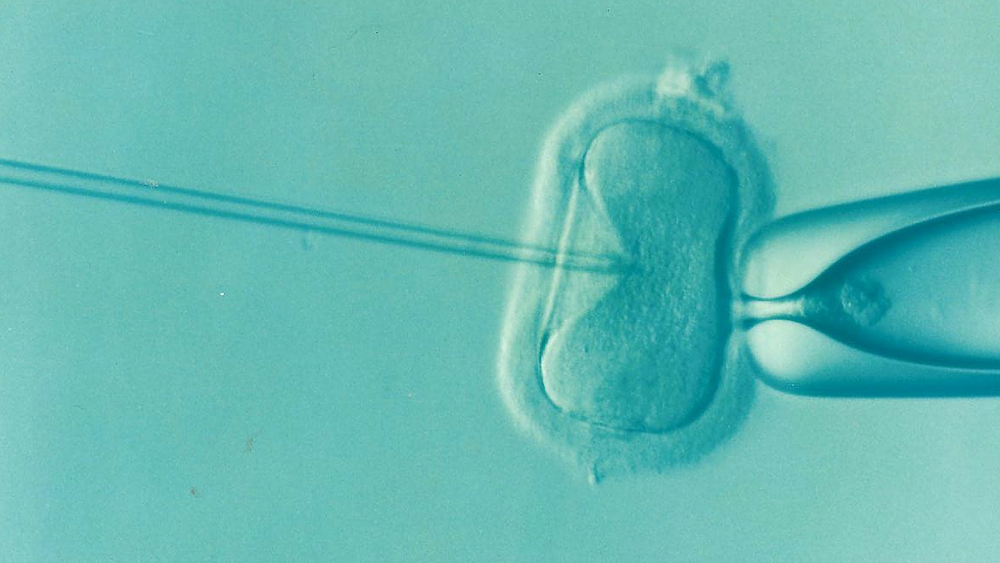
Queensland public-sector employees have had access to up to 10 working days of paid reproductive health leave annually since 30 September 2024. The entitlement includes fertility treatment such as IVF, chronic reproductive health conditions, preventative screening and specified medical procedures, without requiring employees to exhaust other types of leave first.
The Catholic school proposals do not expressly include IVF among the qualifying reasons for the new reproductive leave entitlement. Other existing leave arrangements may remain available for medical treatment or appointments, depending on the circumstances. The proposed agreements also provide for accumulated personal or carer’s leave to be used for preventative medical advice or treatment, including reproductive health screening.
Union raises pay gaps and workload concerns
The Independent Education Union Queensland and Northern Territory has sought reproductive health leave comparable to the public-sector entitlement, alongside improvements in wages and working conditions. Its bargaining claims also cover teacher workloads, school officer classifications and recognition of specialist and leadership roles.
The union says some Queensland Catholic school classroom assistants earn between 10 and 25 per cent less than workers performing comparable jobs in New South Wales Catholic schools. It also argues that the proposed agreement does not adequately address increasing teaching workloads or the working conditions of specialist staff.
Catholic school employers have proposed teacher wage increases of four per cent in 2026, followed by 3.5 per cent in both 2027 and 2028. Their package also includes changes to certain school officer and services staff classifications, along with proposed improvements to leave arrangements. The union maintains that the offer does not sufficiently address its outstanding claims.
More than 22,000 employees covered by ballot
According to Catholic Education Queensland, the bargaining arrangements cover more than 22,000 employees across 313 schools. Separate proposed agreements apply to schools operated by diocesan Catholic education authorities and those under Religious Institutes or Ministerial Public Juridic Persons.
The online ballot will run from 19 to 29 October 2026, with eligible employees able to vote whether or not they belong to a union. An agreement must receive majority support from employees casting valid votes and subsequently obtain approval from the Fair Work Commission before taking effect.
Backpay remains contested as vote approaches
Employers say approval during the October ballot would secure their proposed retrospective wage payments, including backpay from 1 July 2026 for teachers. If the agreement is rejected, existing employment conditions would continue while a replacement is pursued.
Under the employers’ stated approach, backpay following a later successful ballot would begin from the first day of the month in which that vote occurs. The union has criticised the condition, arguing that retrospective wages should remain part of further negotiations rather than depend on approval of the current offer.
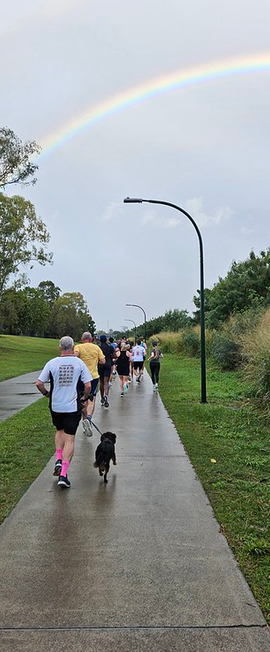
Kedron parkrun gives locals a free 5k every Saturday morning. Kedron parkrun starts at 7am at North Brisbane Rugby Union Club, Kedron Park, 128 Shaw Road. It welcomes walkers, joggers, runners, volunteers and spectators. Everyone can join in at their own pace.
The event page lists 497 events, 20,879 finishers and 1,600 volunteers. It also records 137,794 finishes and 19,632 personal bests. The average finish time sits at 00:30:51. Those figures point to a steady community habit that has kept going week after week.
A flat out-and-back along the brook
The course is 5k long and uses a mix of concrete paths and grass. It begins about 200 metres from the intersection of Kedron Brook Greenway and Shaw Road. From there, runners head towards Kedron Football Club.
The route crosses a small bridge and follows Kedron Brook Greenway under the Gympie Road underpass. It then continues past Bradshaw Park and under the Thistle Street underpass. From there, participants reach Swinburne Street Park.
The turnaround point comes at 2.45km. The return leg follows the same path back to the finish. The course ends beside the North Brisbane Rugby Union Club and Fields. The route is mostly flat, with a few small rises.
Shared paths need shared courtesy
Kedron parkrun uses shared paths, so organisers ask participants to give way to other park users. The course page also reminds runners to watch for cyclists, pedestrians, children, dogs, wildlife and park maintenance work. Marshals may stand at key points, or signs may guide the way.
After rain, some sections may hold mud, leaves or puddles. That is worth remembering before you lace up. The course also asks runners to take care on uneven surfaces and near the Thistle Street underpass, where the path narrows slightly.
Parking is available on Shaw Road and nearby off-street areas. Eagle Junction Train Station is about 1.3km away on foot. Public toilets are available near Brisbane Beach Sports Complex and across Shaw Road in Shaw Park. Participants are asked to arrive by foot, bike or public transport where possible.
The event relies on volunteers each week. Kedron parkrun encourages people to help out, and its home page points to the volunteer page for more information. Children under 11 must stay within arm’s reach of a parent, guardian or appropriate adult.
There is one rule regulars know well. No barcode means no result. Participants need a scannable barcode to receive a time. Those without one can request a reminder email or reprint their barcode from past emails.
The weekly post-run coffee spot is Grid Espresso, 128-150 Shaw Rd, Wavell Heights. That finish-line ritual gives the morning a social edge. It also helps explain why Kedron parkrun remains more than a timed 5k.
Kedron parkrun is free, local and volunteer-run. Most of all, it gives Kedron a reliable Saturday habit that brings people back each week.
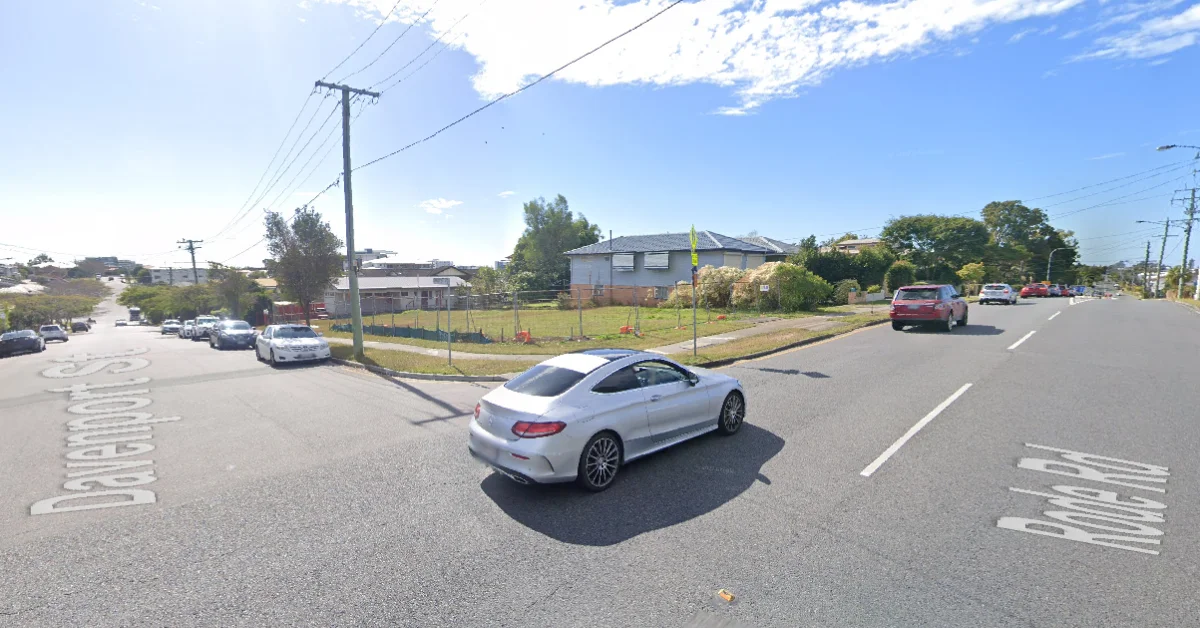
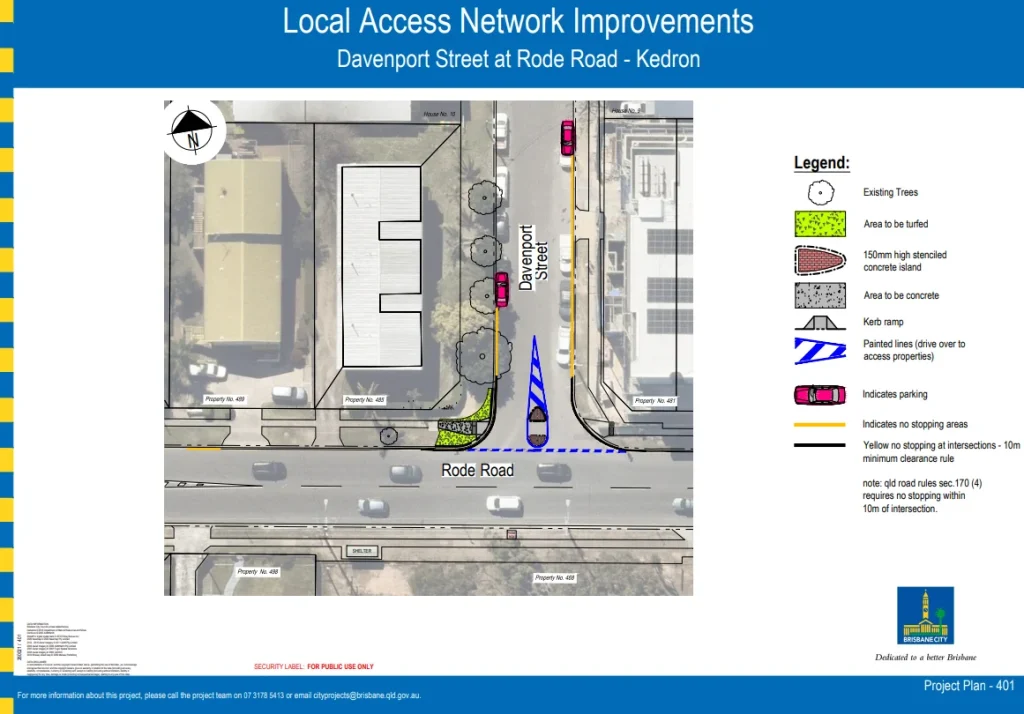
A new pedestrian island is planned for Davenport Street near Rode Road in Kedron, with changes to kerbside parking forming part of an upgrade aimed at making the intersection safer for people on foot.
The works will provide a more accessible crossing point along the residential street, close to bus services connecting surrounding suburbs and local schools. BCC expects construction to begin in late 2026.
A Safer Crossing Means Changes At The Kerb
The pedestrian island will be installed on Davenport Street, allowing people to cross the road more easily while giving approaching motorists a clearer view of pedestrians. Existing kerb ramps will also be upgraded to improve access between the road and footpaths. New line markings and landscaping, including turf installation, will complete the planned improvements.
One of the more noticeable changes will be the introduction of yellow no-stopping lines near the crossing. Sections of Davenport Street currently available for kerbside parking will become restricted areas, keeping parked vehicles away from the pedestrian island.
The restrictions are intended to address two concerns at once: ensuring pedestrians and drivers can see each other clearly, and leaving enough road space for vehicles to pass the new island safely. BCC has not specified how many parking spaces will be affected, although parking will be prohibited wherever the yellow markings are installed.
Just off Davenport Street, Rode Road provides access to several school bus services linking Wavell State High School with neighbouring suburbs. Translink identifies a bus stop near the intersection, served by school routes 918, 973 and 986. The services connect Wavell State High School with destinations including Brookside, the Trouts Road area and Everton Park, with route 918 also travelling via Padua College.
The nearby stop places the planned pedestrian improvements alongside an established school transport route. People walking between Davenport Street and Rode Road will have a new crossing island on the residential street, along with upgraded kerb access.
Improving visibility is a central part of the design, particularly where vehicles approach the crossing and parked cars could obstruct sightlines. The changes are also intended to encourage motorists to travel at safer speeds through the intersection.
Davenport Street at Rode Road was included in BCC’s 2025–26 local works program, with the planned upgrade now approaching its anticipated construction period. The project forms part of the Local Access Network Improvements program, which covers smaller road and pedestrian accessibility upgrades across Brisbane. Construction is anticipated to begin in late 2026, although an exact date has not been announced. Details of the proposed works are available through BCC’s project team on 07 3178 5413.
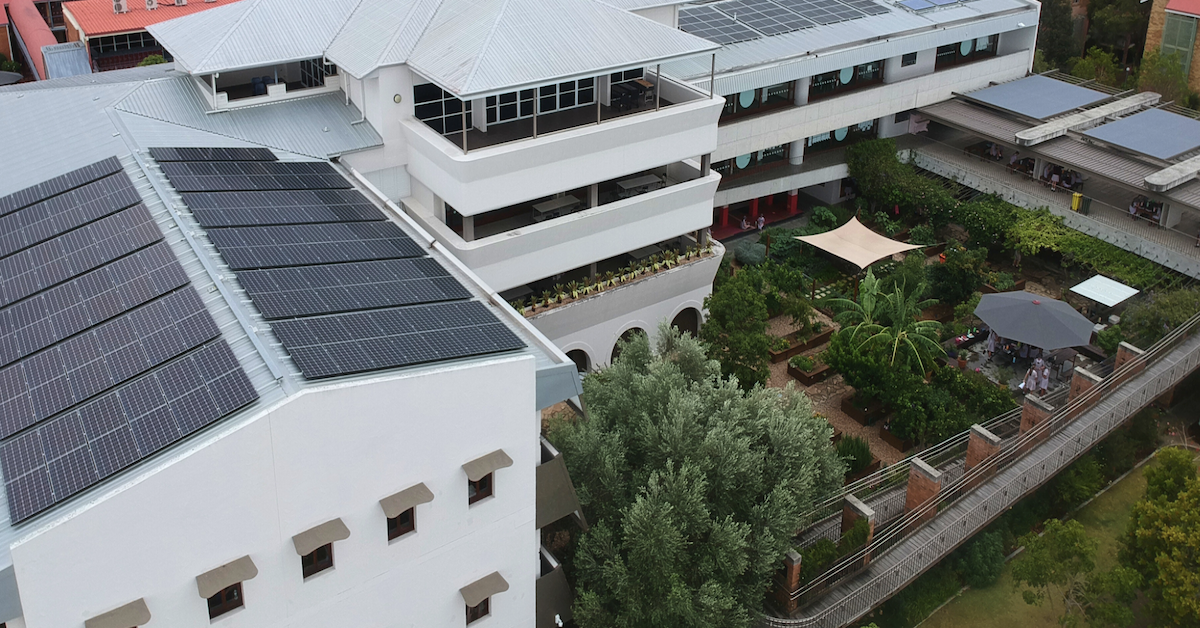
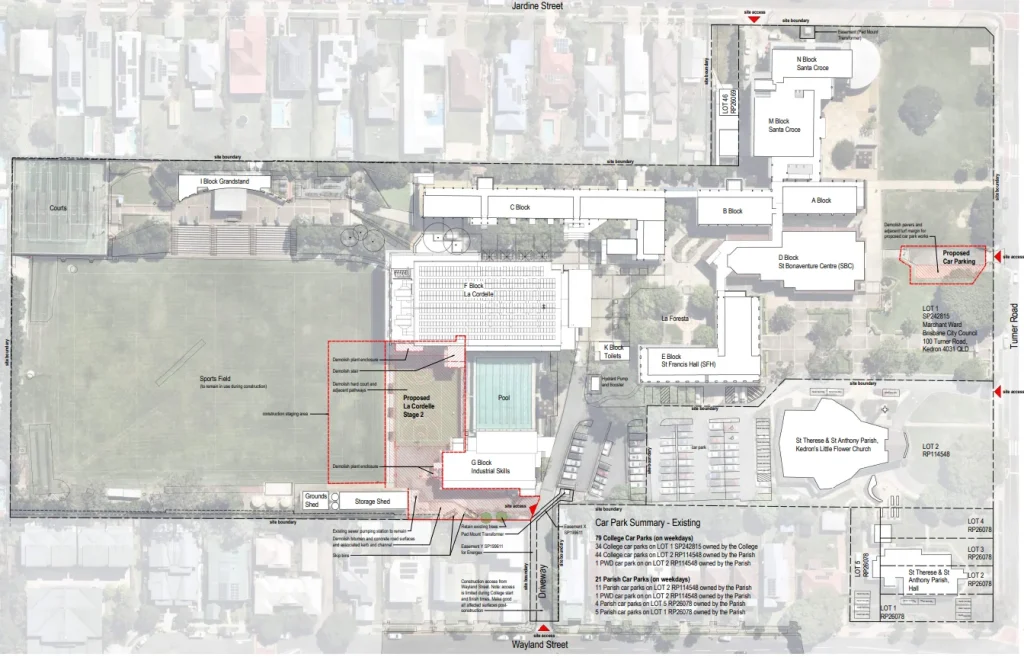
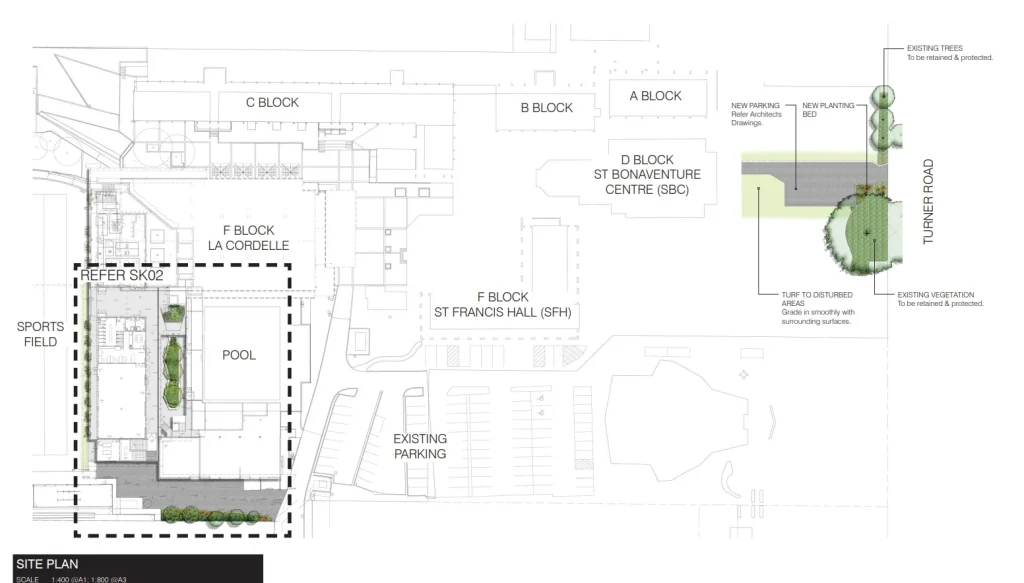
Padua College is planning the next stage of its La Cordelle redevelopment, with a three-level extension proposed to add more learning and sporting space at its Kedron campus.
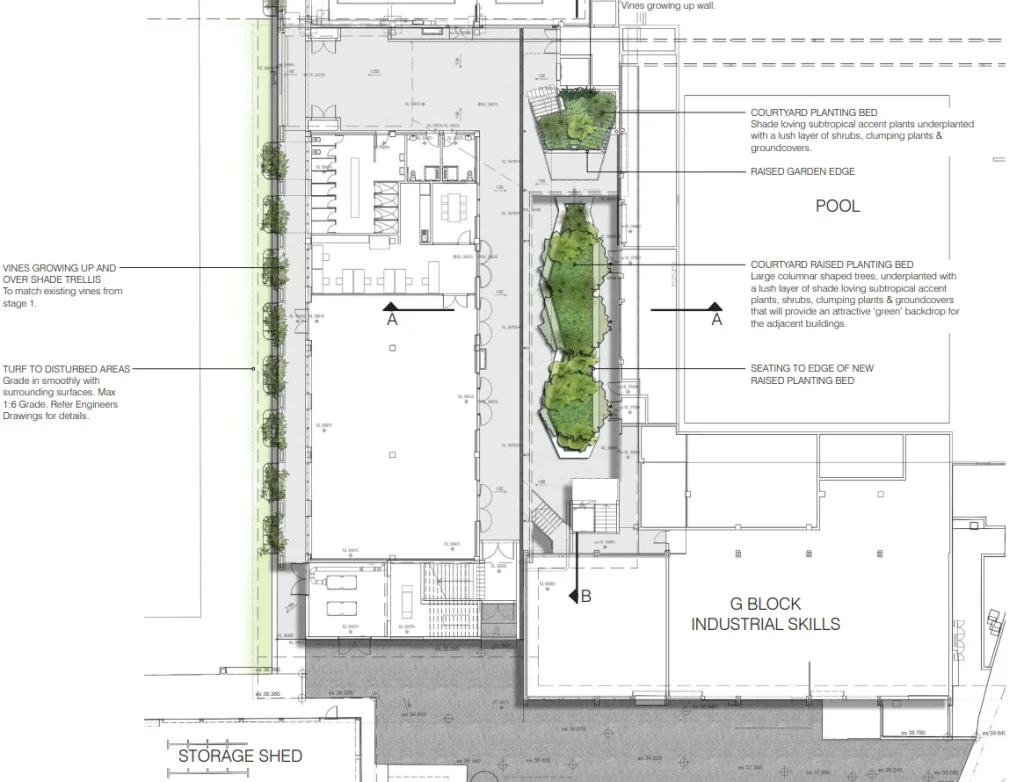
The Stage 2 plans would expand the existing La Cordelle Building at the college’s Assisi Campus, building on the first stage completed last year. New classrooms, multi-purpose rooms and sporting facilities form the centre of the proposal, alongside covered outdoor areas and supporting campus infrastructure.
Photo Credit: DA/A007059398
BCC records show Padua College Limited submitted the application on 2 July 2026, with Planning Initiatives listed as consultant. The proposal covers an extension to the existing educational establishment at 100 Turner Road.
Photo Credit: DA/A007059398
More Room For Learning And Sport
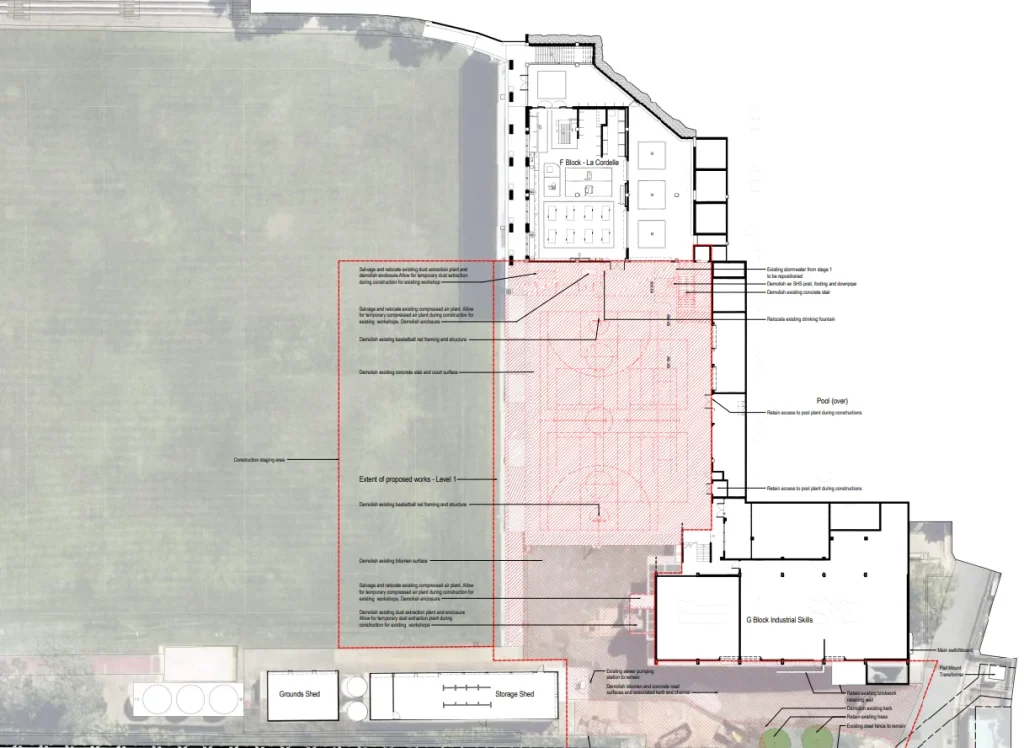
The proposed extension would sit immediately west of the existing La Cordelle Building, over the site of a basketball court. Plans include a gymnasium, sports office, change rooms, amenities and a covered outdoor area on the lower level. Five general learning areas are proposed above, while the upper floor would contain two multi-purpose rooms and a kitchenette.
The building would rise to about 15 metres and would also include circulation areas, plant infrastructure, landscaping and six additional car spaces. Padua College has put forward the extension for its existing student population rather than as part of an increase of 100 student places. The former Franciscan Friary and the heritage fence are not proposed for demolition under the current plans.
Photo Credit: DA/A007059398
The new stage follows the earlier La Cordelle works, which had been under construction for just over 12 months by July 2025. At that point, Padua College was preparing to open new construction workshops, design classrooms, clean technology spaces and a covered outdoor area for students.
The first stage also expanded the college hall by 50 per cent and added air-conditioning. Padua College said the upgraded learning areas would support courses including ATAR Engineering for Year 11 students from 2026.
Photo Credit: DA/A007059398
Stage 2 Moves Through Assessment
The current proposal remains under assessment, with BCC listing application A007059398 as in progress. The application became properly made on 16 July 2026, and BCC issued an information request on 6 August. No decision notice has yet been recorded.
Council lists 16 Jardine Street and 31 Wayland Street as associated properties alongside the main Turner Road site. If approved, Stage 2 would continue the recent expansion of La Cordelle with a mix of general learning, multi-purpose and sporting spaces brought together in one new three-level addition to the Kedron campus.
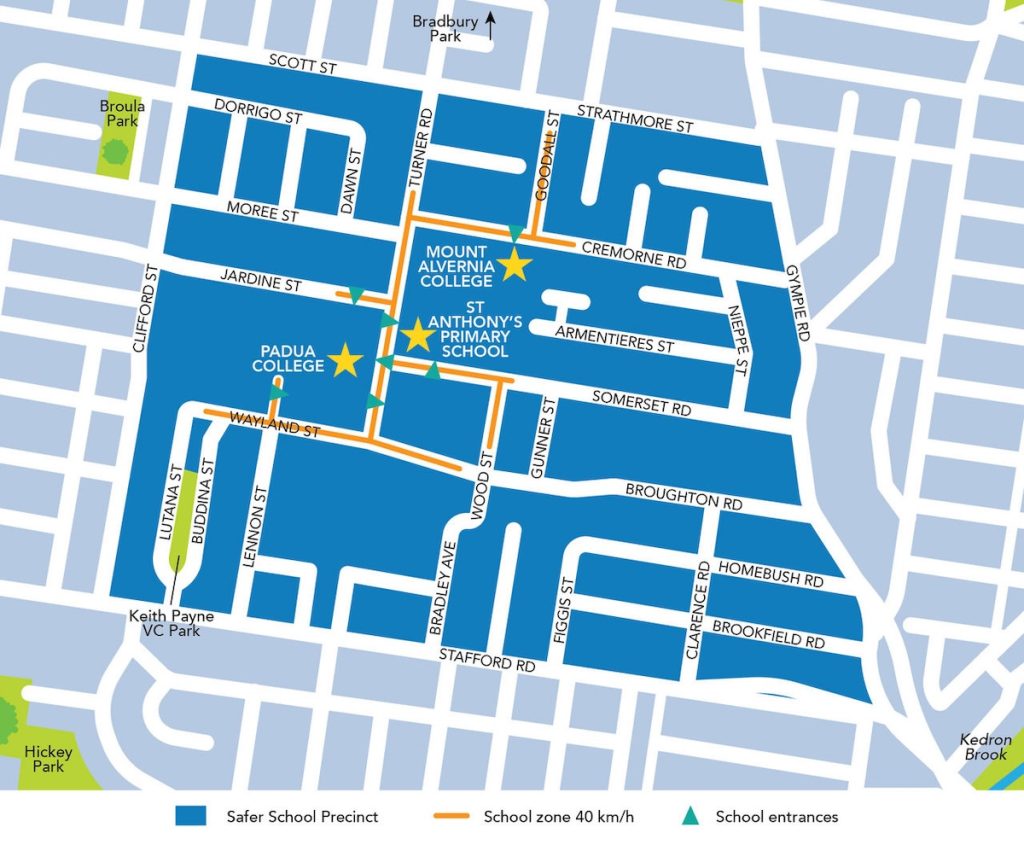
Transport improvements surrounding a cluster of northern Brisbane schools remain in the planning phase, months after Brisbane had expected to release a precinct plan. TheKedron Safer School Precinctcovers Padua College, St Anthony’s Primary School and Mount Alvernia College, which have a combined enrolment of about 3,080 students.
Community engagement conducted in late 2024 generated 311 survey submissions and 11,826 individual feedback points, alongside 385 location markers placed on an interactive map.
Survey results showed 42.7 per cent of respondents rated their overall movement through the area as poor or very poor, while more than 80 per cent gave the same rating to traffic congestion.
Unsafe driver behaviour, extended queues during school drop-off and pick-up periods, limited access into and out of the precinct, and motorists using local streets to avoid major roads were identified among the main perceived contributors to congestion around Turner Road.
Photo Credit: BCC
Infrastructure and Public Transport Under Scrutiny
Feedback gathered during consultation highlighted pedestrian crossings, footpath upgrades and changes to traffic flow as areas for consideration. Public transport performance also featured prominently, with respondents pointing to low service frequency, unreliable arrival times and limited destination coverage as the main barriers to greater bus use.
Council is using the feedback alongside technical guidelines to assess potential measures including traffic-calming treatments and bus-stop improvements.
Earlier State Funding Targeted Three Crossings
Transport investment around the Kedron schools predates the current Council initiative.
Queensland parliamentary records show $479,000 was secured in 2024 for two projects affecting Mount Alvernia College, Padua College and St Anthony’s Primary School. The planned works involved replacing three existing zebra crossings with raised pedestrian crossings, commonly known as wombat crossings.
Published materails also identified the Turner Road precinct as receiving funding through the School Transport Infrastructure Program. The earlier crossing projects were narrower in scope than Council’s current Safer School Precinct program, which covers a broader range of transport issues across the three-school area.
“We expect to be able to share the precinct plan with the community in early 2026, depending on design progress,” the project page stated, as of press time.
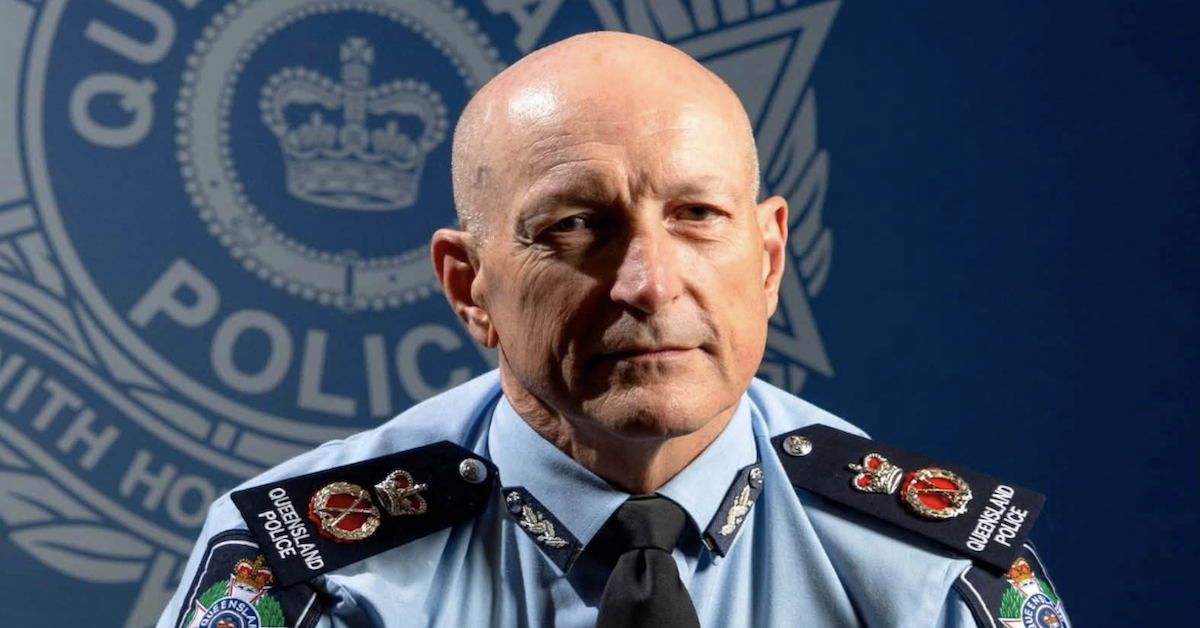
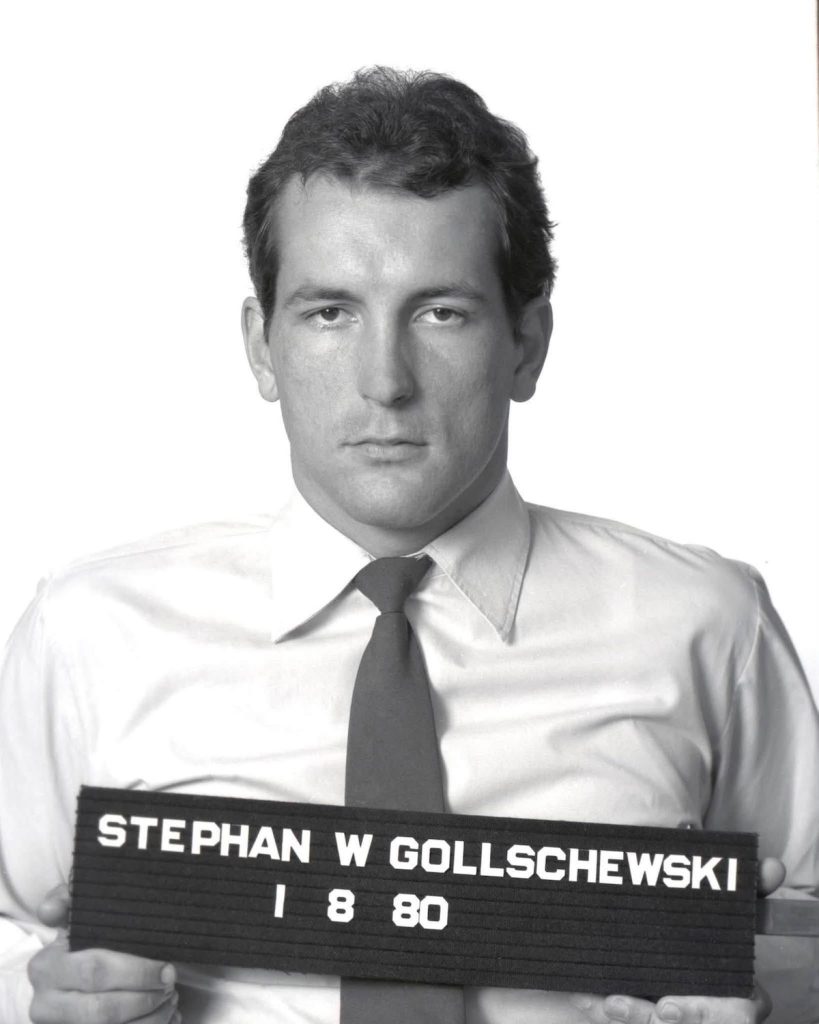
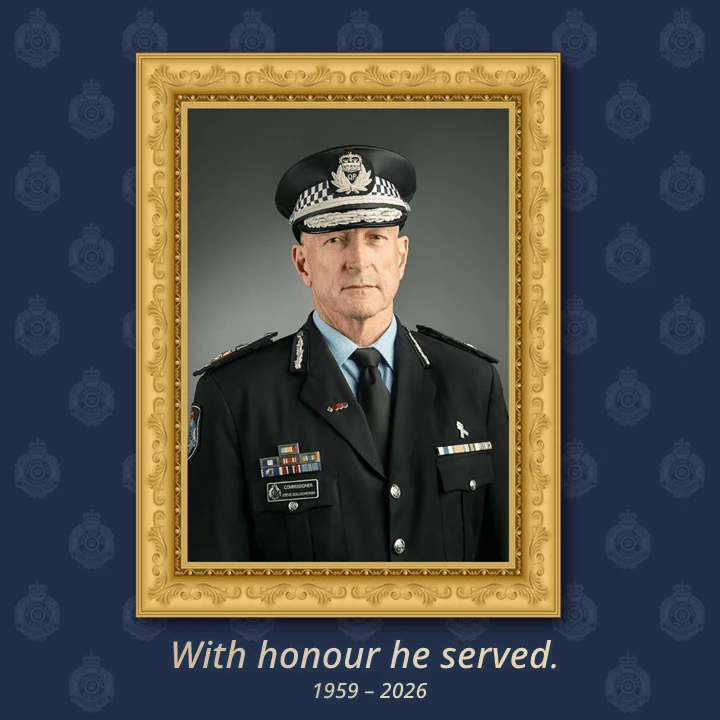
Former Queensland Police Commissioner Steve “Golly” Gollschewski, who lived in Gordon Park for about 15 years before relocating to the Sunshine Coast, has died after an 18-month battle with cancer.
Mr Gollschewski died on 4 September, aged 67, after a policing career spanning more than 46 years. His family said he died surrounded by loved ones after a sudden complication during his cancer journey.
Fifteen years in Gordon Park
Mr Gollschewski and his wife, Rebecca, had a home in Gordon Park for about 15 years before selling the property in 2021.
The home was close to Kedron Brook. The couple later relocated to the Sunshine Coast, where property records showed they had bought at Peregian Beach.
His connection to Brisbane’s northside also included police work. An official career biography records that he served at Boondall Criminal Investigation Branch in 1996 before working on the Carter Inquiry and later joining the Ethical Standards Command.
From detective to commissioner
Born in Brisbane and educated at Mt Gravatt, Mr Gollschewski joined the then-Queensland Police Force in 1980. He served in Maroochydore, Brisbane and Dalby before moving into plain-clothes policing and qualifying as a detective.
His career later included organised crime, intelligence and senior regional commands. He became a deputy commissioner in 2013 after serving as an assistant commissioner and chief superintendent.
Photo Credit: DavidCrisafulliMP/Facebook
Mr Gollschewski also held senior operational roles during major floods, cyclones and bushfires. He was involved in the police response to the 2011 Toowoomba and Lockyer Valley floods and later served as strategic commander for security operations at the 2018 Commonwealth Games.
During the COVID-19 pandemic, he oversaw police operations involving hotel quarantine, airports and Queensland’s road borders, becoming a familiar figure at public briefings.
Queensland’s top policing job
Mr Gollschewski became acting commissioner in February 2024 and was formally appointed Queensland’s 21st Police Commissioner in April.
At the time, he had already spent more than a decade as a deputy commissioner and more than 40 years in policing. He said his focus was on ensuring Queenslanders were safe and felt safe while supporting officers across the service.
He stepped away from the role in February 2025 after being diagnosed with stage 4 lung cancer. After treatment, he returned to full duties later that year before announcing his retirement in February 2026.
Police Minister Dan Purdie said at the time that Mr Gollschewski had served Queensland with professionalism and integrity and had led the state through major disasters and emergencies.
National recognition before his death
Mr Gollschewski was appointed an Officer of the Order of Australia in the 2026 King’s Birthday Honours for distinguished service to law enforcement, counter-terrorism activities and the community.
Kedron recorded 922 offences in the past year, with theft leading the local figures by a clear margin, according to the crime dashboard in the attached images.
The biggest category was other theft, which accounted for 389 offences. After that came drug offences with 141, traffic and related offences with 83, and unlawful entry with 68. The dashboard also shows assault, property damage, unlawful use of a motor vehicle, fraud, handling stolen goods, weapons offences, trespassing and vagrancy, misdemeanour offences and a smaller number of robberies.
For a suburb like Kedron, these numbers show the kind of issues residents may notice around shopping strips, transport corridors and local streets. The data also shows crime was spread across the day rather than limited to one time block.
Evening hours carry the highest offence count
The busiest period was 2pm to 10pm, when 406 offences were recorded. That was well ahead of the 10pm to 6am period, which had 277 offences, and the 6am to 2pm period, which recorded 239.
In the afternoon and evening window, other theft again topped the list with 158 offences. There were also 65 drug offences, 46 traffic and related offences, 27 assaults, 20 property damage offences and 17 unlawful entry offences.
The overnight period also stands out in the data. Between 10pm and 6am, the suburb recorded 96 other thefts, 60 drug offences and 39 unlawful entry offences. That suggests Kedron’s offence pattern is not limited to daylight hours and remains active late into the night.
Crime Stoppers warns of money traps
The local figures come as Crime Stoppers Queensland launches a new national awareness campaign warning people about organised crime “money traps”.
Photo Credit: Crime Stoppers Queensland
The campaign is designed to help people spot recruitment tactics used by criminal networks, including fake job offers, social media messages and promises of easy money. People may be asked to move money through their bank account, share banking details or let someone else use their account.
Crime Stoppers says the warning is aimed especially at international students and temporary visa holders, but the message applies to everyone. If something sounds too good to be true, it probably is.
A timely reminder for Kedron residents
For Kedron residents, the message is a simple one: stay alert to theft, fraud and suspicious online offers, and do not be rushed into sharing personal banking details.
The suburb’s offence data shows crime can take many forms, from property offences to drug-related incidents and traffic offences. Combined with the new Crime Stoppers campaign, it is a reminder that a careful eye and a quick report can help protect the community.
When Telstra’s mobile network began failing early on Wednesday, July 8, the first signs seemed ordinary enough. Mobile signals disappeared. EFTPOS terminals stopped working. Commuters struggled to access transport apps, while businesses across Australia dealt with interrupted phone and data services. In Kedron, however, the outage carried a different weight.
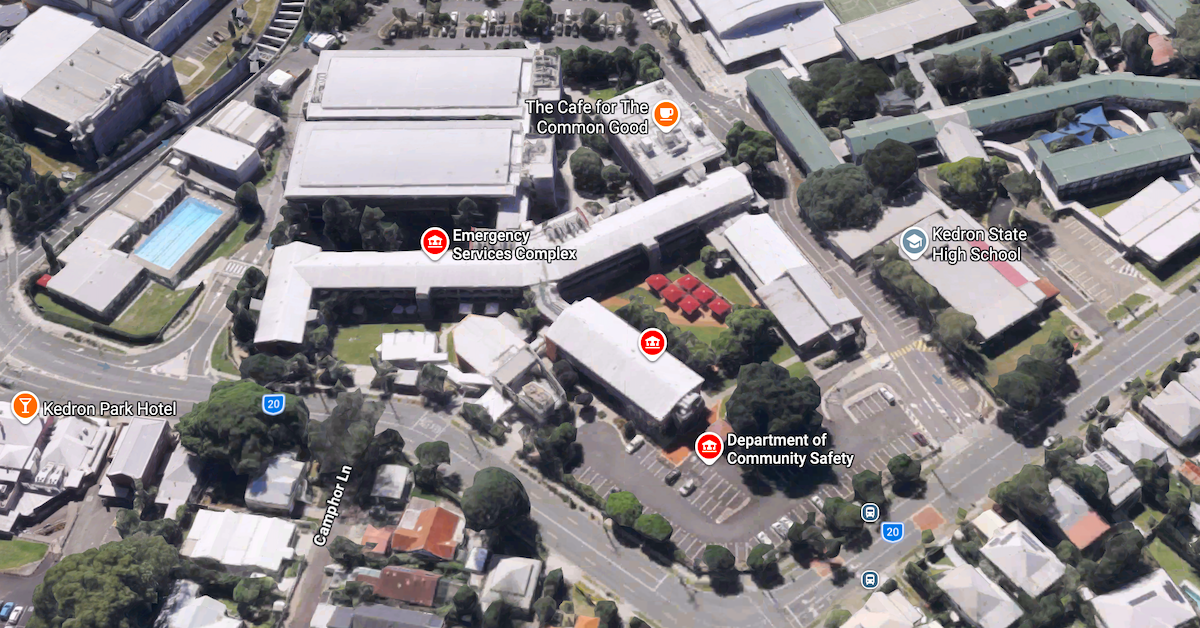
The Brisbane suburb is home to one of Queensland’s emergency communications centres, where Triple Zero calls are received before being transferred to police, ambulance and other emergency services. On most days, that handover takes only seconds. On Wednesday, the nationwide outage made it harder for emergency responders to reconnect with some callers using affected Telstra services.
The Void on the Other End
Health Minister Tim Nicholls said emergency calls continued to be received through the Kedron communications centre during the outage. The biggest challenge came after the initial call.
As Queensland Ambulance Service and other emergency responders tried to call some people back for more information, the network disruption prevented some of those calls from getting through immediately.
Queensland Health said emergency crews later made contact with every affected caller. Even so, the outage highlighted how heavily emergency services rely on stable telecommunications networks to stay connected with the public.
A Fog of Disinformation
As Telstra worked to restore its network, authorities began piecing together the full impact on emergency communications.
Mr Nicholls said Telstra had not initially told the Queensland Government about 17 missed Triple Zero calls affecting the Queensland Police Service. Most of those calls came from regional Queensland. He said Queensland was seeking a clearer explanation from Telstra, including whether the company’s callback systems operated as intended during the disruption.
Queensland Police later confirmed every affected caller had been identified and contacted. Officers carried out welfare checks by phone and, where necessary, in person. Queensland Ambulance Service also confirmed that people who required medical assistance received help.
A software fault with nationwide consequences
While emergency services responded to the immediate challenges, Telstra worked to restore its network.
The company apologised for the outage and said a software fault affecting its network timing systems caused the disruption. It also said there was no evidence the incident was linked to a cyberattack.
For several hours, customers across Australia were unable to make calls or use mobile data. Businesses experienced EFTPOS outages, transport services were disrupted in several states and some customers needed extra time to reconnect once services began returning.
The outage has prompted a federal review into what happened and how emergency communications were affected. Communications Minister Anika Wells said authorities would work with the Triple Zero Custodian and the Australian Communications and Media Authority as investigations continue.
Kedron is simply another Brisbane suburb for many people. Wednesday’s outage offered a reminder that it also plays an important role in Queensland’s emergency communications network. While the disruption originated elsewhere, emergency calls continued to flow through the suburb as authorities worked to reconnect with callers and help those who needed assistance.
Delta Gymnastics Kedron has three reasons to be proud ahead of the Glasgow 2026 Commonwealth Games, with Ruby Pass, Georgia Godwin and James Hardy all named in Australia’s artistic gymnastics team.
The Australian artistic gymnastics team for Glasgow 2026 was announced on 11 June 2026, bringing together experienced Commonwealth Games medallists and first-time Games athletes.
Among those selected are athletes whose pathways have intersected with Delta Gymnastics Kedron at 60 Boothby Street, a venue equipped with international-standard apparatus for high-performance training.
Ruby Pass and Georgia Godwin both spent formative years training through Delta Gymnastics, while James Hardy’s introduction to the sport began there before he progressed through other elite programs.
Ruby Pass: Rising Talent With A Delta Base
Ruby Pass will make her Commonwealth Games debut in Glasgow as part of Australia’s women’s artistic gymnastics team.
The 19-year-old Queensland gymnast has already competed on the Olympic stage. She was the youngest member of Australia’s women’s artistic team for the Paris Olympic Games and has been recognised as a Paris 2024 Olympic finalist.
Photo Credit: Gymnastics Queensland/Facebook
Pass was born in Shellharbour and later moved to Brisbane after her 13th birthday to join Delta Gymnastics. She trained as a Junior International gymnast for around 30 hours per week, with uneven bars as her preferred apparatus.
Her senior results include All-Around, Vault, Uneven Bars and Floor titles at the Australian Gymnastics Championships before Paris. She had also won back-to-back Australian All-Around titles in 2021 and 2022.
Glasgow will be her first Commonwealth Games appearance, placing her among the debutants in an Australian women’s team that also includes Georgia Godwin, Emily Whitehead, Breanna Scott and Kate McDonald.
Georgia Godwin: Senior Figure Returning For Glasgow
Georgia Godwin will return for her third Commonwealth Games after missing the Paris 2024 Olympic Games because of an Achilles injury.
Godwin enters the Glasgow team with one of the strongest Commonwealth Games records in the squad. Her medal record includes silver and two bronze medals at Gold Coast 2018, followed by two gold and three silver medals at Birmingham 2022.
She is a Senior International gymnast training 28 hours a week, born on the Gold Coast, with floor as her favourite apparatus.
Photo Credit: Gymnastics Queensland/Facebook
Godwin’s career also includes qualification for the Tokyo Olympic Games, seven Australian All-Around titles and a named skill in the International Gymnastics Federation Code of Points.
The uneven bars skill, known as “The Godwin”, was added after she performed it at international events in 2023. She is one of a small group of Australian women’s artistic gymnasts to have a named move in the Code of Points.
James Hardy: Early Delta Start Before Glasgow Debut
James Hardy will make his Commonwealth Games debut in Glasgow as part of Australia’s men’s artistic gymnastics team.
The 23-year-old Queensland gymnast first tried gymnastics at age two and began taking lessons a year later at Delta Gymnastics in Brisbane. He later moved to Brisbane Boys Grammar Gymnastics Club and then trained at the Queensland High Performance Centre in Chandler.
Photo Credit: Gymnastics Queensland/Facebook
Hardy has already competed at World Championships level. During his debut World Championships campaign in Antwerp, he established himself among the top 20 vaulters in men’s artistic gymnastics.
He was born in Auchenflower and competes in men’s artistic gymnastics. He had previously identified the 2026 Commonwealth Games and the Brisbane 2032 Olympic Games among his long-term goals.
In Glasgow, Hardy will join Jesse Moore, Benjamin Foster, Tru Hagens and Ritam Malik in Australia’s men’s artistic gymnastics team.
Glasgow Gymnastics Schedule
The Glasgow 2026 Commonwealth Games will run from 23 July to 2 August.
Artistic gymnastics events are scheduled from 24 to 28 July at the Sir Chris Hoy Velodrome and Arena.
Australia’s women’s artistic gymnastics team includes Georgia Godwin, Emily Whitehead, Breanna Scott, Kate McDonald and Ruby Pass. The men’s artistic gymnastics team includes Jesse Moore, Benjamin Foster, Tru Hagens, James Hardy and Ritam Malik.