As of 1 Jan 2024, the toll prices for the Brisbane Airportlink tunnel will increase in line with the All Groups Consumer Price Index. Following the increase, trucks are now charged an additional 80 cents per trip and regular cars an extra 34 cents.
Motorists looking to take the tunnel between Bowen Hills and Kedron or Toombul will now pay $6.72 a trip, up from $6.38 in 2023.
According to reports, car drivers using the tunnel twice daily will pay $13.44 a round trip, or $94.08 a week if they take the tunnel to and from work each day.
Those taking light commercial vehicles through the tunnel, such as load-carrying vans or utilities, will pay even more, with the new trip price now $10.08, up 50 cents.
Heavy commercial vehicles including trucks will pay a staggering $17.79 per trip, an increase of 82 cents each way.
Those travelling between Kedron and Toombul only will pay slightly less fares, with car trips priced at $5.03, up from $4.78 in 2023. Light commercial vehicles taking the shorter trip will pay $7.55 instead of $7.18, and trucks will be stung with $13.35 per trip, an increase of 67 cents.
Photo Credit: Linkt
A Transurban spokeswoman confirmed the toll price increase, which will not change until 2025. Motorists may contact the Linkt Assist team to help with a range of services including payment plans, more time to pay, and toll credits.
The AirportlinkM7 is a 6.7km twin tunnel connecting the Clem7 and Legacy Way tunnels via the Inner City Bypass. Drivers who use the tunnel can avoid up to 14 sets of traffic lights. According to Transurban’s latest traffic data, on average 63,000 trips are taken on the Airportlink every day.
The Northern Transitway project in Brisbane, initially intended to stretch to Hamilton Rd, has been curtailed due to budget overruns and delays, now concluding at Rode Rd in Kedron. This revision has also led to the layoff of about 300 workers, signifying a significant alteration in both the scale and influence of this key public transport development.
These changes have raised questions about the project’s future. A Department of Transport and Main Roads spokesperson noted that it is “working collaboratively with its contractor to deliver the works as efficiently as possible, targeting completion by mid-2024.”
Despite the scale-back, the project’s core goals of improving safety, capacity, and efficiency remain steadfast.
Project Overview
The Northern Transitway extends along a 2.3km corridor on Gympie Arterial Road, stretching from Sadlier Street in Kedron to Hamilton Road in Chermside. The project’s construction has been in full swing, promising to revolutionise public transport in Northern Brisbane.
Photo Credit: TMR
Key features of the project include:
Dedicated Bus Lanes: Serving over 5,000 commuters daily, these lanes aim to streamline bus travel.
Travel Time Reductions: Anticipated time savings of up to 6 minutes during peak hours.
Increased Bus Frequency: Bus services within the corridor are set to increase significantly.
Accessibility Enhancements: Upgrades to bus stops will ensure compliance with disability access requirements.
Safety Improvements: The removal of unsignalised right-turn movements and new traffic signals at key intersections will bolster safety.
Community Impact
The transitway has stirred mixed reactions among local businesses and commuters. The removal of on-street parking to accommodate the bus lanes has particularly affected local businesses.
As the Northern Transitway progresses towards its revised completion in mid-2024, it continues to be a symbol of Brisbane’s evolving public transport landscape. Despite the challenges, the project holds the promise of a more connected and efficient Northern Brisbane, albeit with a footprint different from what was initially envisioned.
The Queensland Government is inviting residents, businesses, and other interested parties to have their say on the tunnel proposal, which aims to tackle congestion in Brisbane’s North.
The consultation follows an announcement by Treasurer Cameron Dick in June this year that a detailed investment proposal was underway into the proposed tunnel.
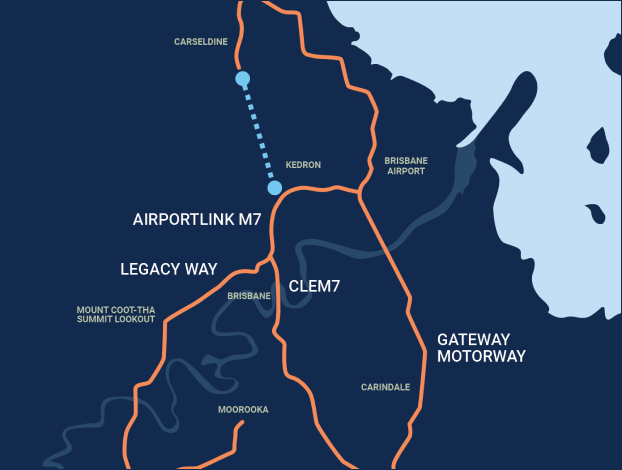
Map of the Gympie Road Bypass Tunnel investigation area, from Kedron to Carseldine, and the surrounding road network (Photo credit: northbrisbaneinfrastructure.com.au)
The investment proposal analysis is being conducted by North Brisbane Infrastructure, a subsidiary of the Queensland Investment Corporation. The results are due to be submitted to the State Government in mid-2024 for further consideration.
Treasurer Dick said the Government is committed to listening to Queenslanders and investing in planning for the state’s future growth.
“This tunnel proposal presents a potential solution for a congestion challenge on Brisbane’s northern fringe,” he said.
Forecast population growth on the Sunshine Coast and in the Moreton Bay region is expected to result in increased commuter traffic heading into Brisbane.
“Now is the right time to do this work,” Mr Dick said.
Minister for Transport Mark Bailey said the tunnel proposal is one way the Queensland Government is tackling congestion.
“From the ‘Second M1’ on the Gold Coast to significant upgrades along the Bruce Highway, we are doing the heavy lifting for commuters in the South East,” Mr Bailey said.
The community can have their say by taking a quick poll, completing an online survey, posting on the comment board or attending an information session. More details are available at www.northbrisbaneinfrastructure.com.au. The consultation period ends on 3 December 2023.
The ‘Walk the Plank challenge’ in Bradbury Park’s new $10 million adventure playground has become a viral sensation on TikTok, attracting families from all over Brisbane.
The new playground at Bradbury Park provides a unique play environment aimed at older children, but with plenty of fun for younger, more adventurous children. It features challenging elements such as the walk the plank installation, a 20cm wide beam with a grippy surface over a soft mat.
According to a local mother’s online post, her child fell 3m from the plank and injured his spine. She complained to the council that the feature was too dangerous. Viral TikTok videos, however, have only encouraged more people to try it.
Photo Credit: Brisbane City Council
While the Council states that Bradbury Park upgrade meets Australian Playground Safety Standards, it recognizes that the playscape has some very challenging aspects that some children may not feel ready to navigate.
Local parents found in the park said the playscape was safe with supervision. Older children crossed the plank while younger ones watched nervously. All parents agreed that it provided a unique, challenging play experience not found in many other Brisbane parks.
Padua College in Kedron has submitted development plans to the Brisbane City Council to build an extension of its current building at its Assisi campus.
The proposal, designed by the award-winning firm M3 Architecture, calls for the partial demolition of the existing La Cordelle building. It also includes earthworks to facilitate the rear extension of the current structure.
The La Cordelle hall, constructed back 2004, houses a covered recreation and sports hall/court as well as accompanying amenities.
Artist’s visualisation for the building (Photo credit: M3 Architecture)
The multi-purpose hall will be expanded and air conditioned whilst the new layout will feature additional technical and design classrooms. Details of the planned development include:
Level 1: 1 construction workshop and associated outdoor covered area
Level 2: 2 design labs, 1 engineering lab, 1 clean tech workshop, and an outdoor breakout space
Level 3: Hall extension and storage
Level 4: Roof extension and plant deck
Proposed site plan (Photo credit: M3 Architecture)
According to planning documents submitted by the college, the extension will improve facilities for current students by expanding the campus within the existing education precinct. The proposal results in no loss of residential land in the area.
The planners stated that the proposal would give Padua College a chance to develop extra teaching areas and amenities for its present students in a coordinated way. They said this integrated approach would help increase and enhance the school’s existing educational facilities.
Inside La Cordelle (Photo credit: Padua College Kedron (Official)/Facebook)
“The proposal is considered to provide a maintain the existing residential amenity of the locale on the basis that the proposed education facilities primarily consists of non-residential sensitive uses, which has limited potential to adversely impact the surrounding residential Neighbourhoods,” said planners from Planning Initiatives.
Strategically situated in the heart of Stafford, the bridge is set to redefine connectivity for pedestrians and cyclists while providing a robust, flood-resistant crossing over Kedron Brook.
The project is part of the massive Kedron Brook restoration works after the creek crossing near Wolverhampton St succumbed to the destructive force of a devastating flood event in 2022, leading to its complete obliteration.
It’s also part of over $26 million worth of sustainable transportation infrastructure projects being rolled out in Brisbane.
Photo Credit: BCC
Photo Credit: BCC
Responding with diligence, the Council undertook the task of reconnecting the bikeway and initiated comprehensive improvement works to restore the area to its former glory.
The work has been a meticulous endeavour that tackled severe erosion along the eastern embankment of Kedron Brook.
Photo Credit: BCC
Key elements of the culvert crossing and adjacent concrete pathways washed away during the flood, were painstakingly reconstructed whilst a commitment to preserving the habitats of protected native species, such as the Tusked Frogs, was also set in place.
Photo Credit: BCC
Restoration efforts culminated in the early months of 2023, with the re-establishment of the destroyed Wolverhampton St creek crossing occurring in February of the same year. Whilst the focus initially rested on immediate restoration, the Council concurrently embarked on an ambitious endeavour: the design and realization of an upgraded bridge that not only guarantees long-term flood resilience but also amplifies connectivity, promoting active travel.
The new Leyton-Wolverhampton Bridge signals a renewed focus on fostering mobility, environmental stewardship, and community well-being, establishing the foundation for a more connected and resilient future.
The Kedron Football Club, one of the oldest in Queensland, has secured funding support from the Community Sustainability Action grant, a program designed to support sustainable practices and reduce energy consumption among its recipients.
The historic football club, founded in 1937, will utilise the grant of $30,000 to upgrade and install high-efficiency LED lighting at its fields, contributing to a significant reduction in energy usage and associated costs.
Kedron Football Club is among 68 community groups and not-for-profit organizations selected to receive funding under the Community Sustainability Action grant program.
These groups will share more than $3.4 million in funding for projects aimed at reducing emissions, cutting energy costs, and enhancing local resilience.
With this grant, the club will be able to implement the latest technologies, including renewable energy systems and energy-efficient lighting, as well as foster sustainability.
“Our community groups do such incredible work on the ground and it’s great to see funding go towards projects that can help them reduce their costs as well as their emissions,” Leanne Linard, Minister for Environment and the Great Barrier Reef said.
With its rich history dating back over eight decades, the Kedron Football Club stands as one of the oldest clubs in the league. The club’s formation was the result of the amalgamation between Kedron and Wooloowin Past Pupil’s Associations, and its founding members.
From its early years, Kedron AFC members have exhibited their prowess on the field, clinching their first premiership success in its second 18’s in the inaugural season. The club’s dedication to excellence continued through the decades, securing multiple premierships and fostering an intense rivalry with Windsor Football Club.
In a strategic merger, Kedron Football Club joined forces with Wilston Grange in 1989 to form the Kedron Grange Football Club, known as the “Demons.” However, the merged entity faced challenges, leading to its eventual dissolution.
By 2006, Kedron Football Club had made a triumphant return to senior football and remained resilient in its pursuit of excellence.
“The Palaszczuk Government is committed to taking action on climate change and increasing renewable energy use in our state to 80 per cent by 2035,” Leanne Linard, Minister for Environment and the Great Barrier Reef, expressed enthusiasm for the community’s commitment to climate change action.
“The overwhelming interest shown by community groups in this grant round points to the priority Queenslanders now place on taking climate change action,” she added.
Supporters view the Club’s dedication to both its sporting legacy and the environment as a commendable example for the community.
In the late 19th century, Kedron was a hub for tanneries, skin traders, and slaughter yards, which were clustered around it. Do you know what made the area so ideal for the ‘skin trade?’
Established in 1886 by Michael Joseph Gallagher, the Kedron Tannery quickly earned a reputation for producing high-quality leather products. Situated on the western side of Gympie Road and upstream from other tanneries along the creek, the success of this business reached nationwide recognition, thanks to Mr Gallagher’s business acumen and the effectiveness of his tanning methods.
Mr Gallagher’s efforts contributed significantly to the growth of Kedron as a thriving leather industry centre until its closure in the 1960s or two decades after he retired at 84 years old.
In the same period, Paul Maggs and his family settled in the area, and in 1889, he founded the Edinburgh Tannery at the end of Nundah Street, adjacent to Kedron Creek.
The Edinburgh Tannery, like Gallagher’s, experienced remarkable success, becoming another well-known name in Australia’s leather trade. With its strategic location alongside the creek, the tannery benefited from easy access to water, a crucial resource for the tanning process.
Mr Maggs was a prominent figure in the tanning industry, and apart from the Edinburgh Tannery, he owned two other tanneries in the region. The Avondale Tannery, established in 1889, was the first of his ventures, but it was later sold in 1894. The larger Edinburgh Tannery, established in the same year as the Avondale Tannery’s sale, operated until 1904 before Mr Maggs embarked on a new venture.
In 1906, he built the Bristol Tannery downstream, which would ultimately become the last and largest of his three tanneries. The Bristol Tannery thrived under his ownership for six decades, leaving a significant mark on the history of the local leather industry. It became a prominent landmark along Kedron Creek and contributed to the economic prosperity of the region.
Tannery Placed Kedron on the Map
The region’s abundant water flow, particularly in the catchment area of Kedron Brook, provided an ideal environment for tanneries, skin traders, and slaughter yards to flourish.
As the tanneries flourished, Kedron became the centre of the industry on the North Coast. At that time,tanneries were all running at full capacity, and their leather found its way to markets in the southern states, as inter-colonial barriers had been broken down.
Kedron’s tanners contributed substantially to the state’s economy through their importation of materials and their leather exports.
Inside the tanneries, powerful and efficient machinery aided in labour-saving processes. The supply of hides came from various locations across Queensland, amounting to tens of thousands of hides processed annually.
In addition to hides, there was also a substantial trade in sheepskins, with a high demand that the tanners struggled to keep up with. Kangaroo skins, on the other hand, were becoming scarcer each year, leading to a decrease in their trade.
The primary bark used for tanning came from the black and silver Wattle of South Australia, and tanneries imported significant quantities of it annually.
However, as the tanneries continued to prosper, concerns from local residents regarding pollution increased. This led to early legislation targeting the tannery trade in the area.
Despite the challenges posed by such regulations, the industry persisted, adapting to changing times and demands. Both Gallagher’s Kedron Tannery and Edinburgh Tannery continued to thrive in their respective locations.
As time passed, the tanning industry faced further transformations. In 1966, Johnsons & Sons of Chermside acquired Paul Maggs’ tanneries, including the Bristol Tannery, marking a new chapter in the tanning business.
The tanneries remained operational until 1973, when Johnsons & Sons made the decision to sell the properties for housing development. They relocated their operations to the northern outskirts of Brisbane, an area with a long-standing tradition of hosting the tanning industry.
Kedron’s Bradbury Park has undergone a remarkable transformation just in time for the school holidays, with a new, futuristic playscape for older kids, updated play areas for activities that include cricket and netball, and spaces for the whole family to gather, pets included.
Located at 91 Kitchener Road, Bradbury Park has long been a popular recreational spot for the community. Designed to cater to children aged 10 to 15, the park now boasts a revitalised playscape, complete with climbing towers, bridges, and whimsical play structures. The exciting additions to the park aim to provide older kids with an engaging and thrilling outdoor experience.
Aside from the new playscape, families can enjoy a range of amenities, including shady spots for picnics, electric barbecue facilities, and various sporting facilities like cricket nets and a netball facility.
The introduction of the futuristic playscape fills a gap in the recreational offerings for older kids in the area. With indoor play centres often being expensive, this innovative outdoor play area provides a more accessible and affordable option for families.
Photo Credit: BrisbaneCityCouncil
The park also features a dog off-leash area, making it a suitable destination for the entire family. Parents and children alike have expressed their gratitude for the addition, praising the park as an amazing and much-needed facility.
However, one visitor did offer a word of caution, advising others to wear dark clothes when visiting the playscape. The wooden structures in the park have been charred, resulting in black residue. Whilst this may not deter the adventurous spirits of children, it’s important for parents to be aware.
Photo Credit: BrisbaneCityCouncil
The Bradbury Park improvement project is part of Brisbane City Council’s commitment to enhancing and maintaining over 2100 parks across the city. As the Marchant ward continues to grow, it is crucial to ensure that parks can cater to the recreational needs of residents.
The project has been a collaborative effort between Brisbane City Council and the community. Extensive community engagement was conducted in late 2019 to gather feedback and ensure the park’s enhancements align with the community’s desires.
Would a toll tunnel from Kedron to Carseldine alleviate traffic congestion? That is the $35-million question. The proposed 7-km tunnel would potentially traverse the long-preserved North West transport corridor and closely follow Gympie Road to connect the two suburbs.
This proposal for a tunnel from Kedron to Carseldine comes after Brisbane City Council’s North West Transport Network plan, which included two options for a road tunnel, was rejected by Infrastructure Australia earlier this year.
Council’s proposal had yet to sufficiently consider a cheaper surface route, although this alternative faces community opposition and environmental concerns due to its impact on ecologically sensitive areas.
To undertake the necessary assessments and analysis, a new entity named North Brisbane Infrastructure will be established by the Queensland Investment Corporation. This entity will be responsible for detailed transport modelling, technical assessments, and financial analysis.
In addressing traffic congestion, the project will also consider public and active transport needs, including bicycle lanes.
A recent statement outlines the potential benefits to be examined as part of a detailed investment proposal, including:
shorter commuter times
better connections with the Bruce Highway to and from the Sunshine Coast
better connections to the west of the city through Legacy Way and south through the Clem7 to the M1
improving amenities and liveability for locals by removing through traffic from Gympie Road
Treasurer Cameron Dick is confident that the tunnel could be constructed within eight years if it proves viable.
Mr Dick emphasized that the state government’s proposed toll tunnel offers a new solution to the long-standing challenge of easing congestion in Brisbane’s north. The forecasted population growth in the Sunshine Coast and Moreton Bay region is expected to increase traffic into Brisbane, making it an opportune time to address this issue.
“This is a new solution proposed for a long-established challenge – easing congestion through Brisbane’s north,” he said. As a world leader in funds management, the Queensland Investment Corporation has nearly $30 billion worth of infrastructure assets under management.
“It has the expertise to give us the clearest answer in the shortest time to decide whether a Gympie Road toll tunnel stacks up.
“Forecast population growth on the Sunshine Coast and in the Moreton Bay region will increase the traffic into Brisbane, so now is the right time to do this work. Based on Brisbane’s most recent road tunnel projects, from this point the tunnel could potentially be built within about eight years if it stacks up.”
The Kedron to Carseldine tunnel’s construction would be tolled due to the project’s significance. The project’s proponents anticipate that the tunnel would improve connections with the Bruce Highway to and from the Sunshine Coast, as well as facilitate better connections to Brisbane’s west via Legacy Way and south through the Clem 7 to the M1.
A community consultation will be conducted in the last half of 2023 to gather input from local residents, businesses, and other stakeholders. The work on the investment proposal is set to begin in the 2023/24 financial year.